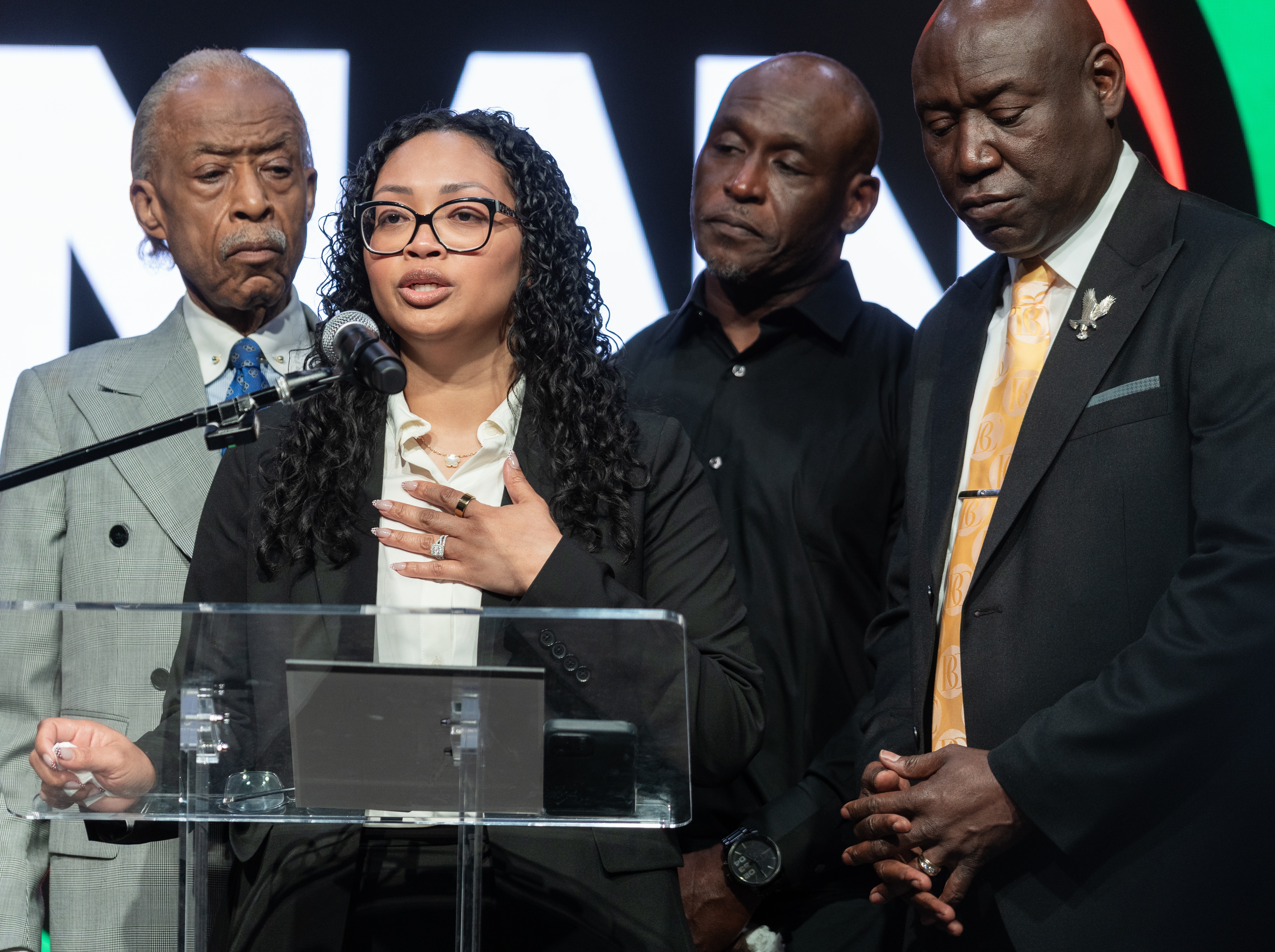
Nolan Wells’s mother Christine Wonsley held a press conference on July 10, 2026, in New York City after her son’s mysterious death over the Fourth of July off the coast of Mississippi.
Photo: Steve Sanchez/Sipa USA via AP Images
There is a tangible heat to being Black in America this summer.
Every morning starts the same. A jolt of coffee and nicotine as my thumbs scroll a daily intake of Black death and indignity.
It mostly comes dosed in tears. Tears of Black moms and aunties, projected behind stone-faced fathers and grandpops trying to hold it together behind press podiums.
This summer, it was
Nolan Wells
, an 18-year-old who disappeared during a trip to Mississippi’s Horn Island over the Fourth of July. Wells, who traveled to the island with a predominately white group of friends, was found dead in the water two days later. Authorities have not announced a final determination of what happened, but Wells’s family has challenged the official timeline and sought an independent autopsy. The investigation remains ongoing, which is to say that another Black family is waiting for answers in the indeterminate dark. In a state synonymous with deep-seated anti-Black racism, and the highest
number of recorded lynchings
, speculators and community members have begun to fear the worst.
It’s an expectation that has set the tone for living while Black in this new era. Where at any moment you, as Black person, can be erased for the most negligible of offenses, and if you’re not careful, be discarded into the void.
Before Nolan Wells, we watched in June as another Mississippi family laid their Black boy to rest.
Kohen Wiley
, who was just a year old, was shot and killed by Senatobia police officers, who fired into the vehicle where Wiley was sitting on his mother’s lap. After a friend of Wiley’s mother was accused of shoplifting a box of diapers at a Walmart, police opened fire on their car under the pretense that the vehicle was “oncoming” toward the of