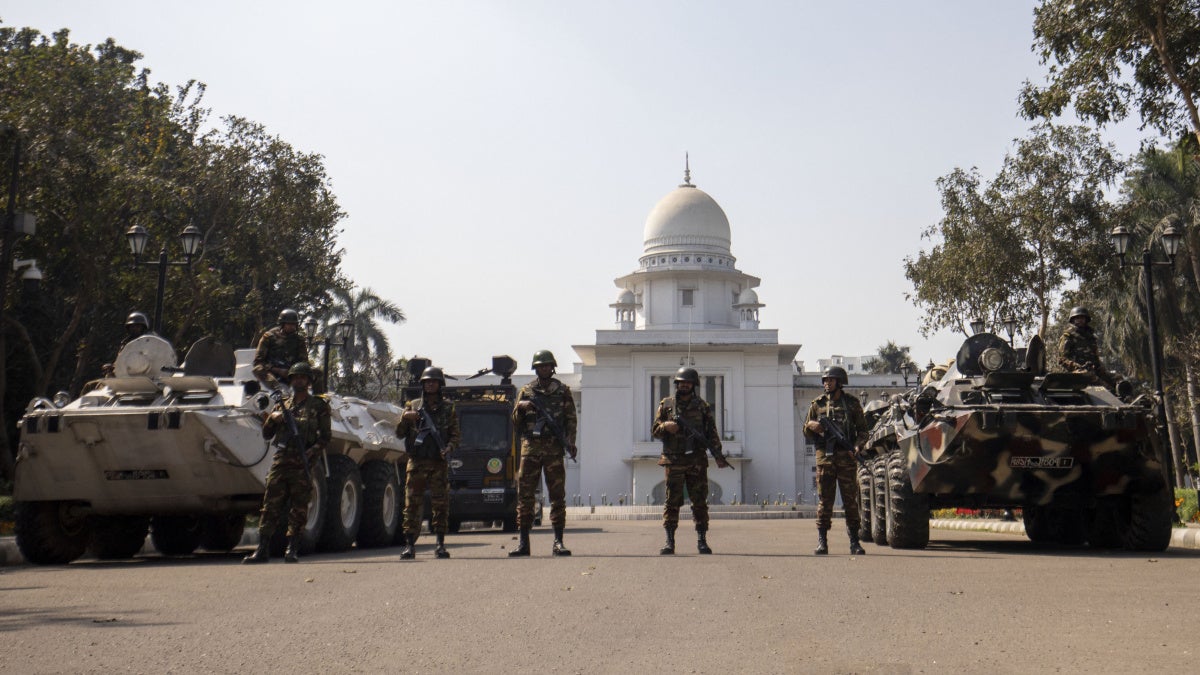
Bangladesh military and Rapid Action Battalion personnel stand guard outside the Supreme Court in Dhaka, February 8, 2025.
(London) – The Bangladeshi authorities should immediately comply with a July 12, 2026 court order to investigate the alleged disappearance of 30-year-old Miraj Sheikh, who was last seen in the custody of the Coast Guard, in what appears to be the first known enforced disappearance case in two years, Human Rights Watch said today. The government should also reverse its decision to scrap reforms aimed at preventing enforced disappearances and instead ensure accountability by security forces.
Under the previous government, which was toppled by protests in 2024, enforced disappearances became endemic. This led the interim government that governed Bangladesh between August 2024 and elections in February 2026 to adopt the National Human Rights Commission Ordinance in November 2025. The ordinance provided for independent investigations of enforced disappearances and the power to inspect any detention facility without requiring a court order. However, the newly elected Bangladesh Nationalist Party (BNP) government allowed the ordinance to expire and proposed a new law that would bar the Human Rights Commission from investigating alleged rights violations by security forces.
“Thousands of people were subjected to enforced disappearance during Sheikh Hasina’s 15-year rule, and this latest case shows that without genuine reforms they can happen again,” said Meenakshi Ganguly, deputy Asia director at Human Rights Watch. “It is clear that these practices have become entrenched in Bangladeshi security agencies, and the new government, which has pledged reform, should ensure safeguards, institutional reforms, and accountability.”
Under international law, an enforced disappearance is the detention or abduction of a person by state forces (or persons