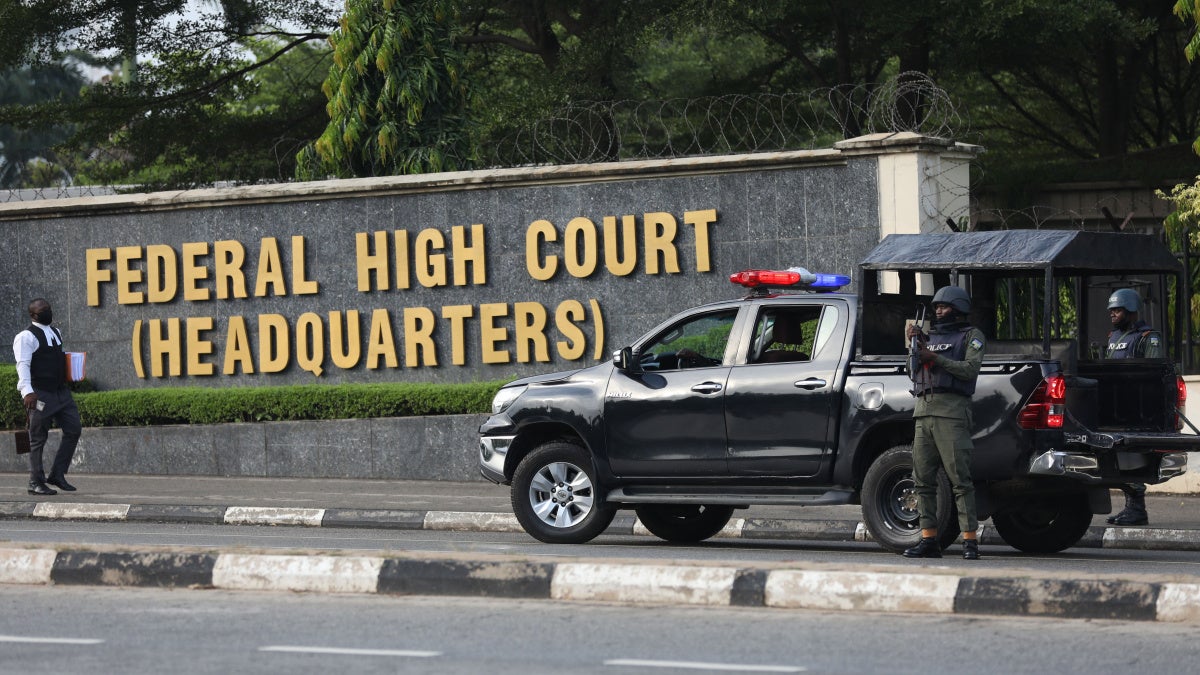
Members of the Nigerian police force are seen outside the Federal High Court, in Abuja, Nigeria, on October 21, 2021.
The Nigerian authorities’ prosecution of Boko Haram suspects does not advance justice for serious international crimes, as the cases continue to target primarily low-level suspects and raise significant fair trial concerns.Trials were conducted without witnesses or circumstantial evidence, prosecutors dropped some seemingly serious charges, while many plea-driven convictions were for aiding armed groups that may have been coerced, and legal defense provided by the government appeared inadequate.Nigerian authorities should ensure that all terrorism trials comply with international fair trial and due process standards, including basing prosecutions on credible and sufficient evidence, and guaranteeing adequate time and facilities to prepare a defense.
(Abuja, July 22, 2026) – The Nigerian authorities’ prosecution of Boko Haram suspects does not advance justice for serious international crimes, as the cases continue to target primarily low-level suspects and raise significant fair trial concerns, Human Rights Watch said today.
On April 8, 2026, the Nigerian authorities began the ninth phase of terrorism trials involving more than 500 defendants. The tenth phase began on June 15 with about 600 defendants. Lower-level suspects accused of offenses related to providing material support to armed groups, such as Boko Haram, dominate the court’s docket, while prosecution of those most responsible for serious international crimes are not being prioritized. The judicial proceedings also appear to be based on evidence insufficient to justify criminal convictions. Human Rights Watch raised similar concerns in 2018.
“Nigerian authorities should hold those responsible for atrocities by Boko Haram and security forces to account, but they repeatedly prosecu