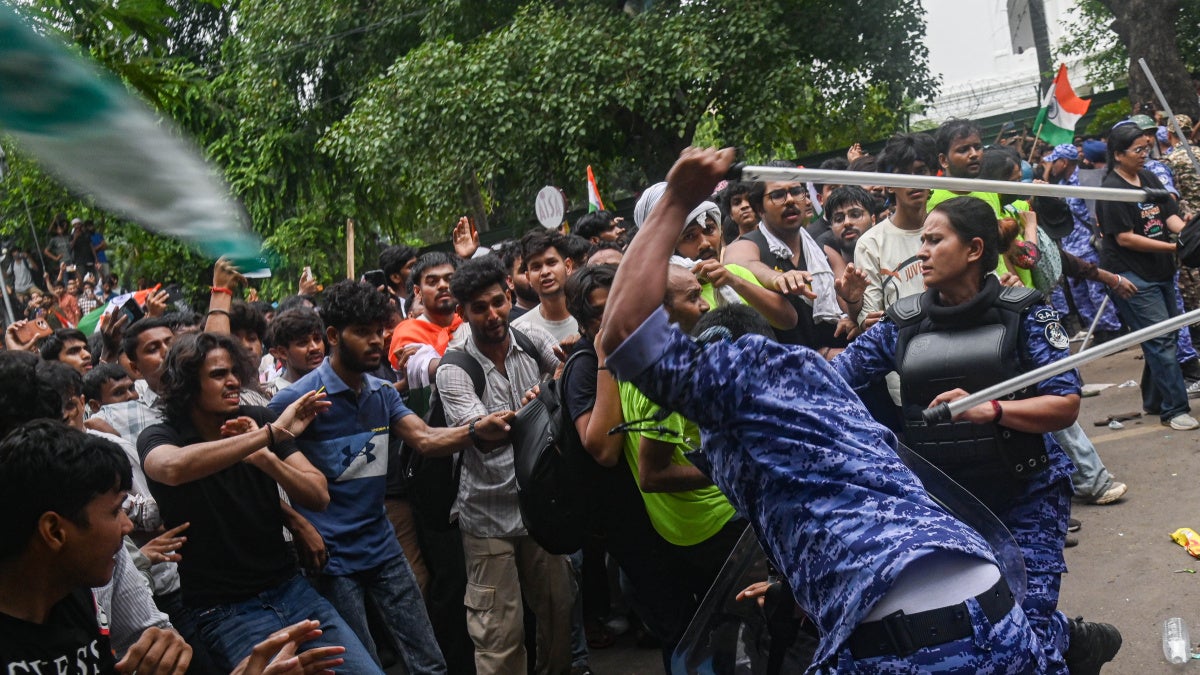
Police officers use batons to disperse protestors during a march by the Cockroach Janta Party in New Delhi, India, July 20, 2026.
© Photo by Kabir Jhangiani/NurPhoto via AP
(New York) – Indian security forces used tear gas and batons to suppress largely peaceful student and youth protests in New Delhi on July 20, 2026, Human Rights Watch said today. Prime Minister Narendra Modi’s administration should promptly and impartially investigate unnecessary and excessive use of force, allow peaceful protests, and stop suspending mobile internet services, which put people at added risk.
Protests that began in June to demand accountability for mismanagement of medical entrance examinations grew to include grievances against unemployment and government corruption. The “Cockroach Janta Party,” a Gen Z-led movement that began after the Supreme Court chief justice compared unemployed youth to cockroaches, called for a peaceful march to parliament on July 20. Scores of people, including some police officers, were injured, with one young woman protester in critical condition.
“India’s youth wanted to march peacefully to parliament to seek accountability from their elected leaders,” said Meenakshi Ganguly, deputy Asia director at Human Rights Watch. “Instead, the police met them with batons, tear gas, and internet shutdowns.”
Human Rights Watch interviewed 9 witnesses, including protest organizers, journalists, and student protesters; and analyzed and verified 10 videos posted on social media.
On July 21, political opposition leaders criticized the police crackdown, calling the government “insensitive” and “authoritarian.” Delhi police temporarily detained several top opposition leaders after a nearly three-hour protest in front of Modi’s residence. The Supreme Court refused to hear a plea on alleged police abuses against student protesters, saying, “