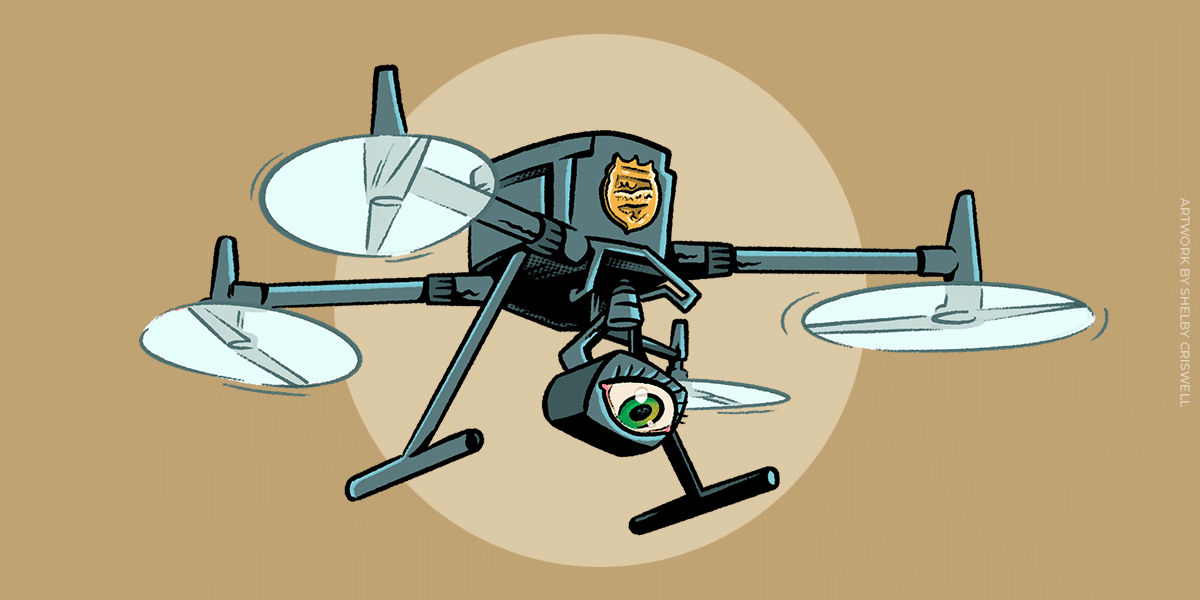
Police departments across the country are lining up to launch drone-as-first-responder (DFR) programs, and hundreds have cleared a necessary hurdle toward making deployment a reality, expanding aerial surveillance and data collection even in areas patrol officers typically can't reach.
As of February 2026,
over 1,000 public safety agencies
—including police, fire, and other emergency management agencies—had received Federal Aviation Administration (FAA) waivers needed to automate drone operations and launch a DFR program, according to a recent Freedom of Information Act (FOIA) release listing agencies that have obtained
Part 91 waivers
since the
FAA
streamlined and sped up the process in April 2025.
The changes led to a massive increase in the number of waivers issued. Only 976 DFR waivers had been granted since the first DFR program launched in 2018 through April 2025, according to an FAA representative. The agency issued more waivers between April 2025 and February 2026 than it had in the previous seven years combined.
A map illustrating the locations of police departments and other public safety agencies that have received Part 91 waivers, making it possible for them to launch drone-as-first-responder programs. (This map image links to Google Maps, which is governed by Google's privacy policy)
The new FAA process for waivers and the rush of police departments to obtain them signifies a shift in law enforcement's use of drones: from human-operated aerial surveillance to AI-based autonomous drone use.
Typically, a drone operator is only permitted to fly in areas that can still be seen by the pilot, and that drone pilot needs to be certified under FAA Part 107. To fly drones “Beyond Visual Line of Sight” (BVLOS) requires additional approval from the FAA, as do flights above 200 feet, due to the risk of colliding with planes and other aircrafts. Without such approval, an officer could not pilot a drone from a desk inside a building and fly it to a cal
… [more]