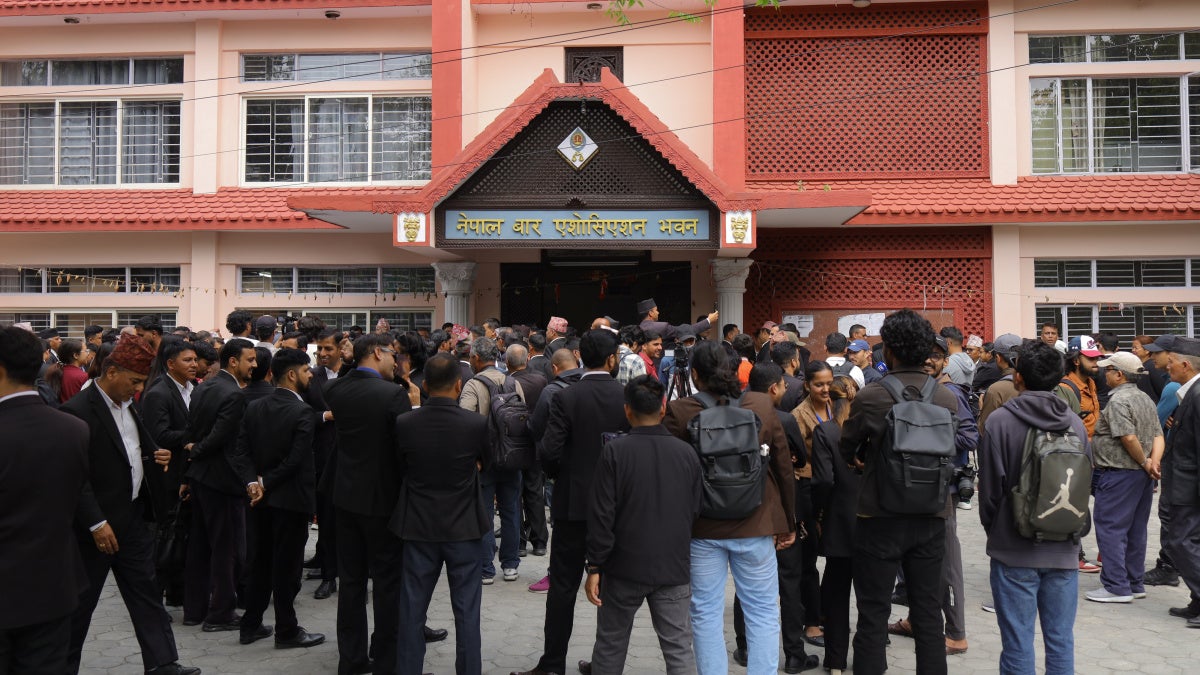
Nepali lawyers stage a protest against the Supreme Court administration's refusal to register writ petitions and applications in Kathmandu, Nepal, on May 19, 2026.
(Geneva) – Recent actions by the government of Nepal that threaten the independence of the country’s judiciary are a source of serious concern, Amnesty International, Human Rights Watch, and the International Commission of Jurists (ICJ) said today.
In particular, political pressure has reportedly been applied to alter the composition of the Supreme Court through the forced resignation or impeachment of sitting justices. In May 2026, the government improperly amended the Constitutional Council Act through an executive ordinance, rather than through parliamentary legislation, as required under Nepal’s Constitution and rule of law principles.
The organizations are concerned about the consequences of amendments to the Constitutional Council Act, which altered the quorum and voting requirements of the Constitutional Council, the body responsible for recommending appointments to key constitutional offices, including the chief justice. Given that political office holders already constitute a majority of the council’s membership, the amendments further increase the risk of undue political influence over judicial appointments and undermine international standards on judicial independence and the rule of law.
“The independence of the judiciary is a cornerstone of the rule of law and an essential safeguard for the protection of human rights,” said Ian Seiderman, senior legal and policy director of the ICJ. “Any reform of Nepal's justice system should strengthen—not weaken—the independence, impartiality, and integrity of the courts.”
These concerns have been compounded by the recent appointment of Dr. Manoj Kumar Sharma as chief justice. His appointment departed from Nepal's long-standing practice of a