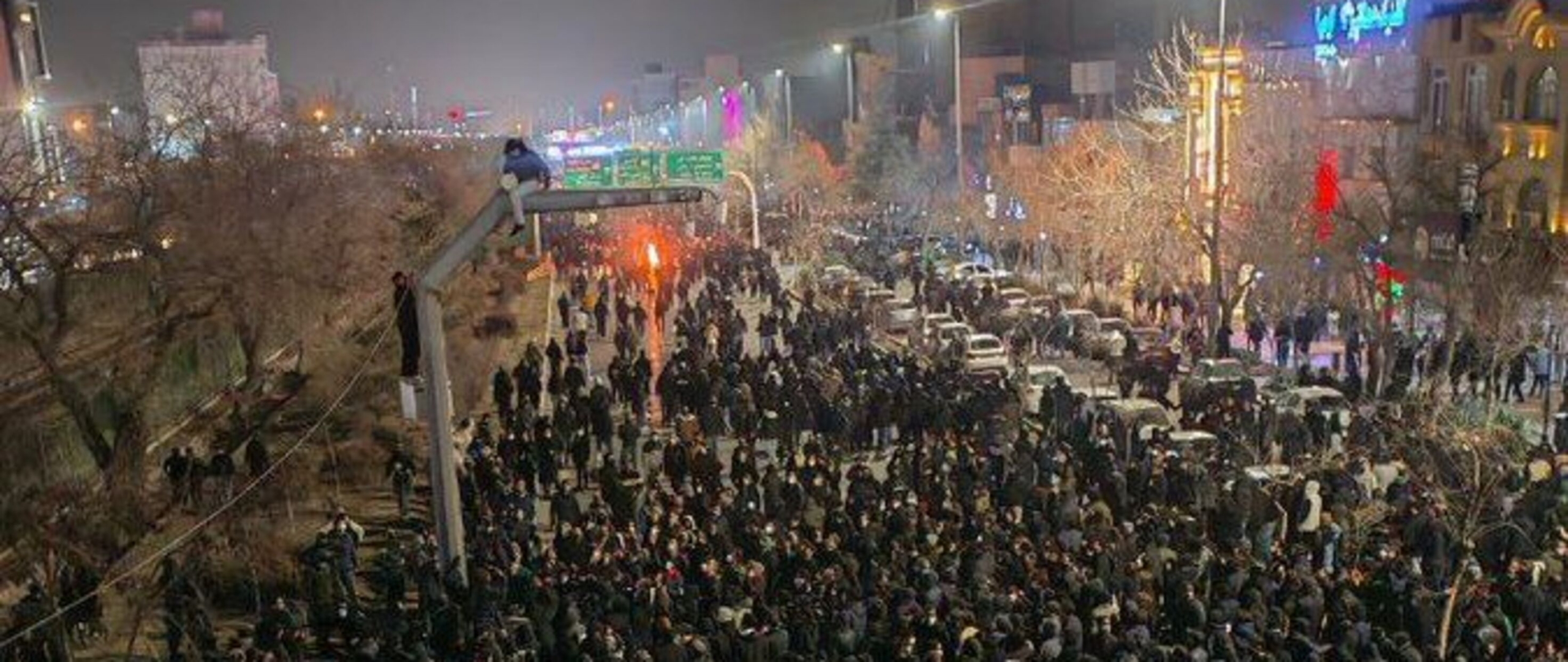
The public execution of two protesters today, following the arbitrary execution of at least three other protesters last week, marks a further escalation in the authorities’ use of the death penalty to quash dissent, Amnesty International said. The organization fears that at least 60 others, including three arrested as children, remain at risk of execution after being sentenced to death, while many others are facing prosecution on capital charges in relation to the protests.
In the first half of 2026, Iranian authorities have increasingly used broadly worded national security charges, including espionage and collaboration with hostile states, to convict and sentence to death individuals arrested in the context of the January 2026 protests. Since the beginning of the year, they have arbitrarily executed at least 26 people convicted of offences in connection with the January 2026 protests, following torture-tainted grossly unfair trials by Revolutionary Courts. Beyond those targeted in the context of the protests, the authorities have arbitrarily executed at least 26 other individuals on politically motivated charges, while continuing to carry out hundreds of executions for drug-related offences and other crimes.
The Iranian authorities are unleashing a horrifying wave of executions and death sentences to punish and suppress dissent and project an image of strength and absolute control in the wake of the January popular uprising and amid ongoing attacks by US and Israeli forces.
Heba Morayef, Amnesty International.
“The Iranian authorities are unleashing a horrifying wave of executions and death sentences to punish and suppress dissent and project an image of strength and absolute control in the wake of the January popular uprising and amid ongoing attacks by US and Israeli forces,” said Heba Morayef, Regional Director for the Middle East and North Africa at Amnesty International.
“The muted response from the international community emboldens the Irania
… [more]