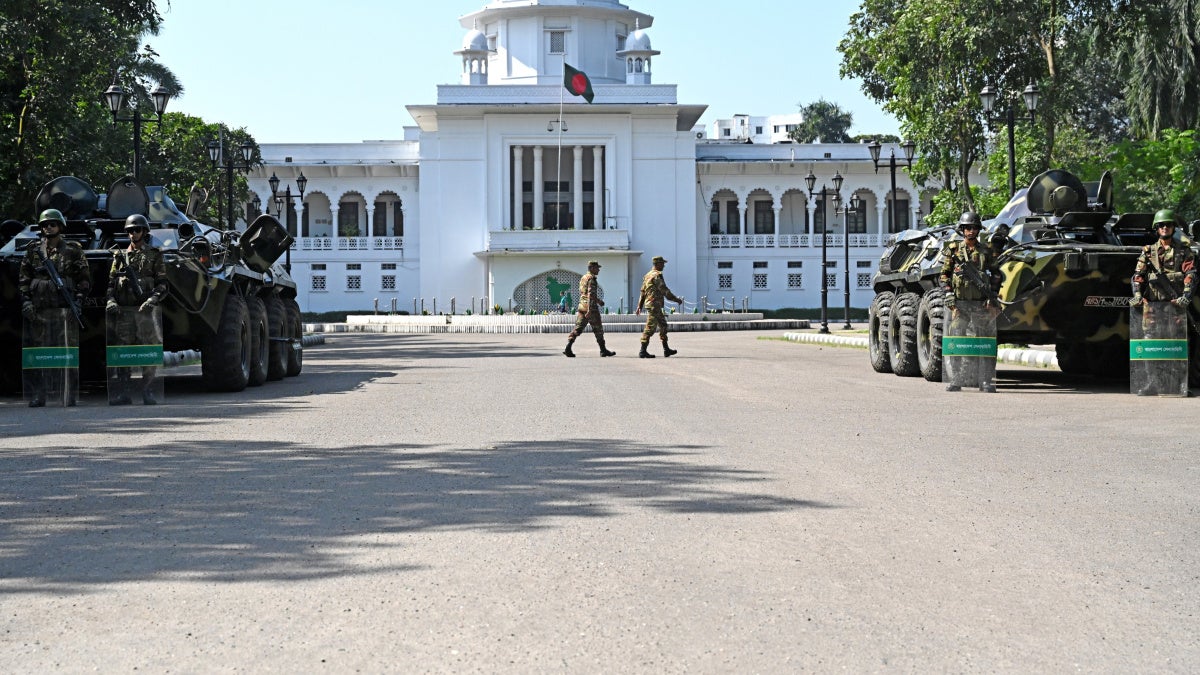
Bangladesh military personnel guard the International Criminal Tribunal in Dhaka, Bangladesh, November 17, 2025.
(London) – Bangladesh authorities are failing to uphold international legal standards at the country’s International Crimes Tribunal, Human Rights Watch said today. The failures risk denying justice to victims, undermining the rule of law, falsely imprisoning political opponents, and repeating the rights violations of the past.
On July 27, prosecutors submitted charges against 41 people for crimes against humanity and genocide. The tribunal is prosecuting individuals, including politicians, members of security forces, and even journalists, accused of serious human rights violations under former Prime Minister Sheikh Hasina’s Awami League government, which was toppled by protests in 2024 after over 15 years of increasingly authoritarian rule.
“Those responsible for the many abuses committed under the Sheikh Hasina government should be appropriately held to account, but many prosecutions are falling short of international fair trial standards,” said Meenakshi Ganguly, deputy Asia director at Human Rights Watch. “Bangladesh needs to urgently reform its criminal justice system, and the new government should ensure that there is no room for political vendettas through shoddy investigations and arbitrary allegations.”
The tribunal is hearing cases related to the security forces crackdown on student-led protests in July and August 2024, resulting in over 800 deaths and thousands of serious injuries, which ultimately toppled the Awami League government. The tribunal is also prosecuting other abuses, including alleged extrajudicial killings and disappearances, committed during Hasina’s rule.
Human Rights Watch monitoring of over a dozen cases being prosecuted by the International Crimes Tribunal—a domestic tribunal mandated to try serious crimes under