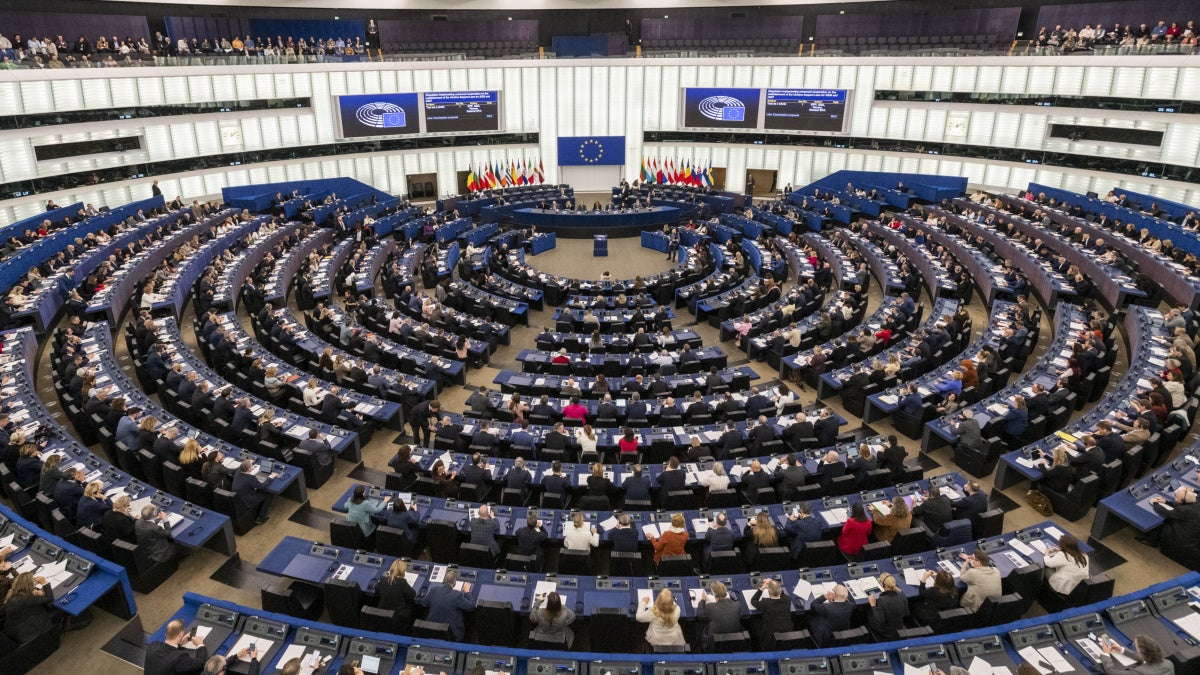
The European Parliament chamber in Strasbourg, France, February 11, 2026.
The European Parliament in Strasbourg adopted on June 16 its second motion in a year pressing European Union institutions and governments to address transnational repression. Transnational repression encompasses violations used by states to target, silence, or intimidate critics, particularly nationals and former nationals, who are outside their borders and beyond their territorial jurisdictions. In its worst forms, transnational repression includes killings, attacks, and abductions by government operators or their proxies. Other forms of transnational repression—online harassment, surveillance, denial of consular services, harassment of relatives at home, and abusive extradition requests— are harder to document but have a chilling effect. Exiled human rights defenders, journalists, and opposition supporters are particularly at risk. But virtually anyone who fled repression or speaks out against abuses can become a target. The European Parliament lists China, Iran, Russia, and Belarus at the top of states engaged in transnational repression in Europe and globally. But others, including Egypt, Azerbaijan, Türkiye, and Rwanda, have a troubling record. In east Africa and southeast Asia, governments appear to facilitate or turn a blind eye to cross-border repression on their soil, exponentially increasing the harm transnational repression does to human rights and rule of law. In recent years, the EU’s foreign service has boosted its response to transnational repression, with 2025 seeing references in statements to China’s human rights record and in an EU-led resolution on human rights in Eritrea, and sanctions against Iranian officials. The European Parliament’s motions now provide a more ambitious ro
… [more]