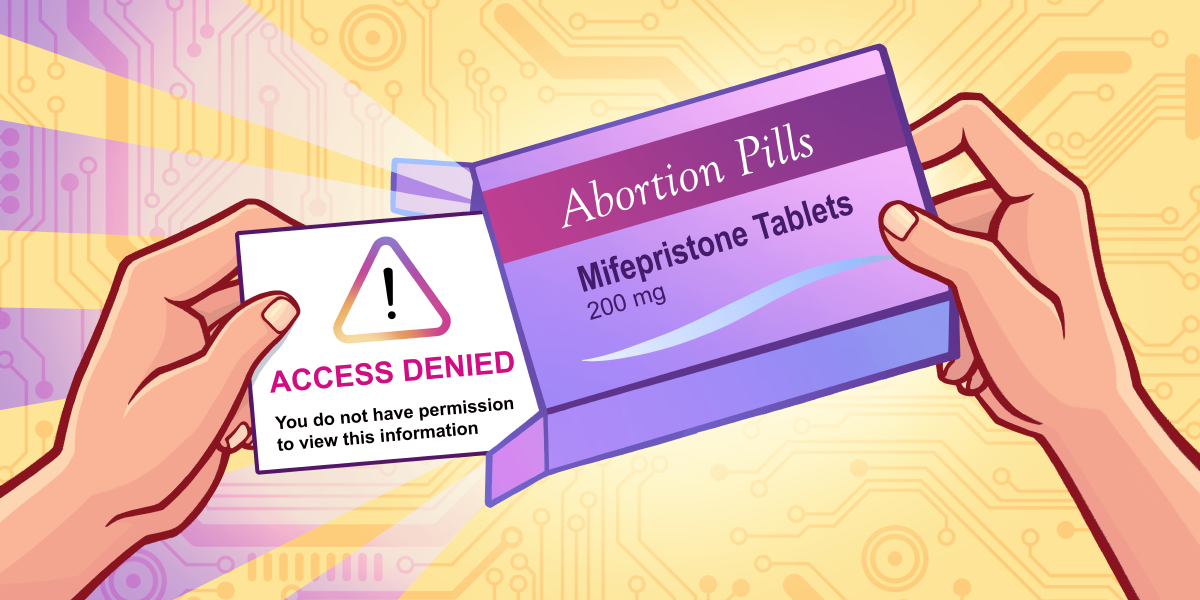
Access to accurate information about reproductive and maternal health can be critical. But on Meta's platforms, simply talking about prescription medication, abortion care, or one's own medical experiences can be enough to trigger content removals and account restrictions.
That's why EFF recently submitted a public comment to the Meta Oversight Board in its consideration of
a case involving an Instagram post about prescription drugs during pregnancy
and childbirth. The case touches upon a topic we’ve been documenting for some time; last year we collected stories from individuals who had experienced censorship of reproductive health information on various platforms. Meta in particular stood out: Its moderation systems routinely fail to distinguish between prohibited drug transactions and legitimate discussion of medications, including educational information and people's firsthand experiences with healthcare.
Through our
Stop Censoring Abortion
project, EFF collected nearly 100 submissions from healthcare providers, clinics, educators, advocates, researchers, and others whose reproductive health content had been removed or suppressed by social media platforms. What we found was alarming: systemic over-enforcement, confusing policies, arbitrary takedowns, sudden account bans, de-ranking, and appeals that too often went nowhere.
Talking About Medication Isn't the Same as Selling It
In almost every case we reviewed, the censored posts and accounts did not actually violate the platforms' stated rules. Meta frequently cited its
Restricted Goods and Services policy
, which prohibits attempts to buy, sell, trade, donate, gift, or request pharmaceutical drugs. But the content EFF documented overwhelmingly consisted of factual or educational information—not attempts to sell or distribute drugs.
The consequences were significant. For example, the
Miscarriage+Abortion Hotline
had its Instagram account restricted and posts removed even though it was providing in
… [more]