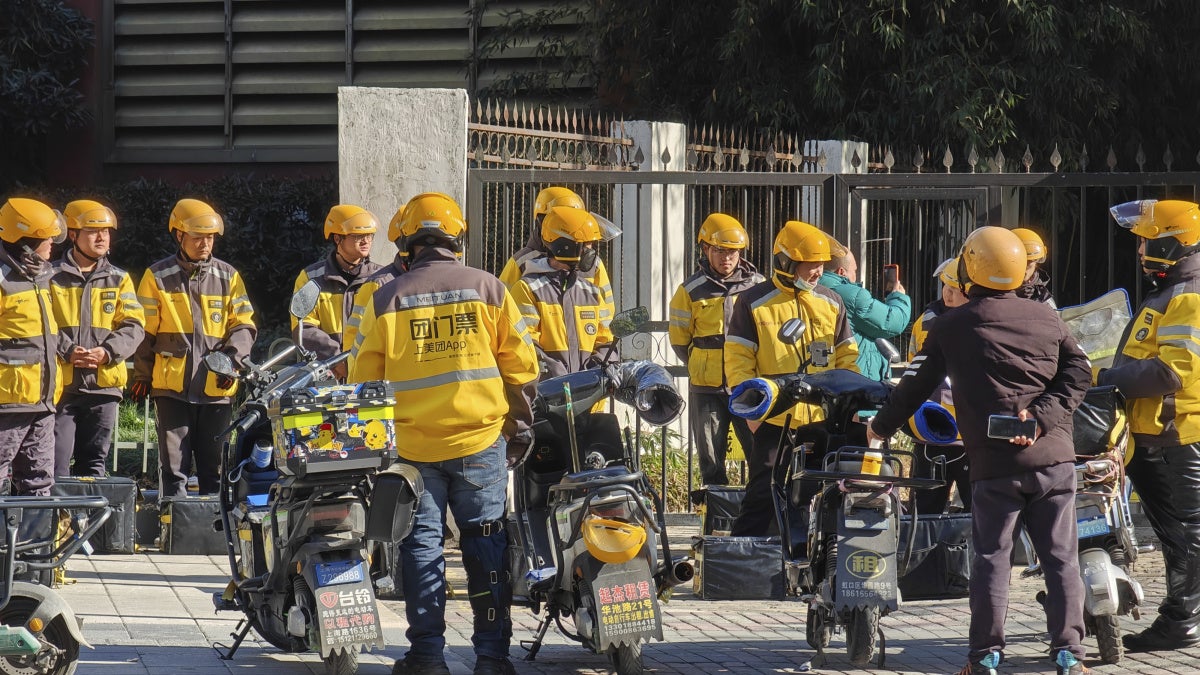
Food delivery workers are lining up to collect orders in Shanghai, China, January 14, 2024.
China has pledged to strengthen protections for gig workers, and on June 12 the country voted for a landmark International Labour Organization (ILO) convention on “Decent Work in the Platform Economy.” These commitments could matter: an estimated 320 million people in China now rely on flexible, tasked-based gig work for employment, according to a new report by a Chinese government-affiliated think tank.
But promises on paper will mean little unless workers can organize, speak out, and hold both gig platforms and the government accountable.
China’s weak formal job market has pushed many young people toward gig work. Youth unemployment hit a record high of 21 percent in mid-2023, before the government revised the methodology leading to a lowered figure, and youth unemployment remains a source of anxiety.
Like gig workers worldwide, those in China face low, unstable pay, unsafe conditions, and little or no protection when injured at work. But they face an additional burden: state control. In China, workers are denied the right to form independent unions and can face arrest and imprisonment for organizing.
The Chinese government pledged in April 2026 to strengthen social security, pay, and rest for gig workers, but the same pledge also calls for strengthening Chinese Communist Party control over them. It calls for gig workers to “follow the Party” and that Party organizations maintain “comprehensive coverage” over the new gig economy.
Despite this growing governmental control, gig workers in recent years have continued to protest. One demonstration was sparked by an image that went viral of a food delivery worker kneeling before a security guard, begging to pass, so he could meet an algorithmic deadline.
The Chinese government’s support for the ILO convention should
… [more]