Over the past decade, the conflict in Mali between the armed forces and their allies and various non-state armed groups has forced hundreds of thousands of people to flee their country, including to Mauritania.
Certain armed groups, in particular the Group for the Support of Islam and Muslims (GSIM), also known as Jama’at Nusrat al-Islam wal-Muslimin (JNIM), and the Islamic State – Sahel province (ISSP), violate the right to religious freedom, and plunder civilians’ goods and resources. They are also driving people out of their villages, particularly in the Ségou, Timbuktu, and Mopti regions.
In July 2026, 290,000 Malian refugees were
registered
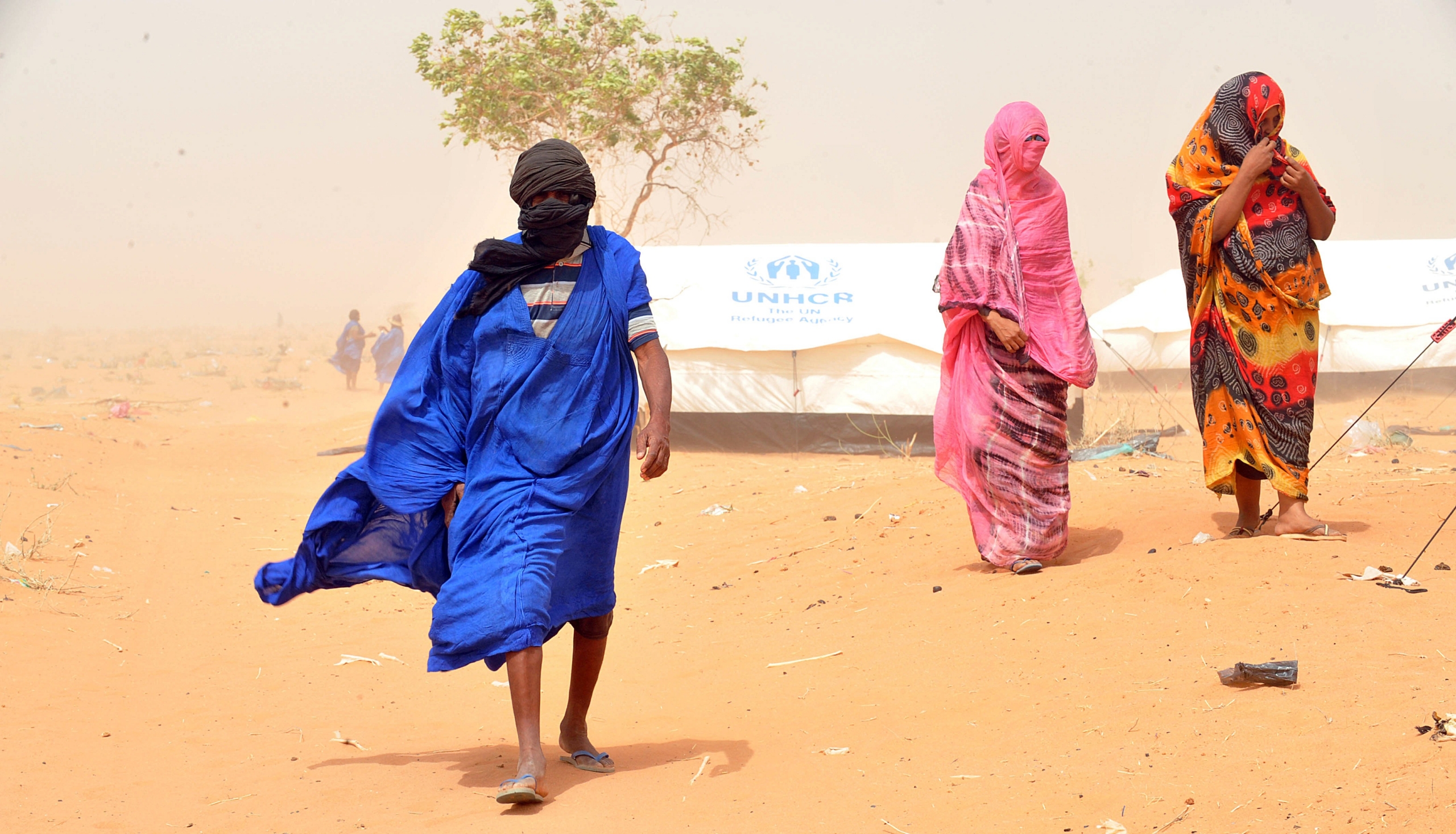
by the UNHCR in the wilaya [region] of Hodh Ech-Chargui, in southeastern Mauritania, near the Malian border.
Amnesty International visited them in 2025 and 2026 as part of a research about abuses committed by the parties to the conflict in Mali.
© Patrick Meinhardt/AFP via Getty Images
A refugee stands next to a tent at a makeshift camp in Doueinkara, near the Mauritanian border with Mali.
“They came to impose their rule”
Husseini* was a herder in Mali. He left the Ségou region in October 2024 with members of his family and now lives in the hamlet of Kleiva, in Mauritania.
“What happened to us in Mali has happened in many other villages across the country. The jihadists came to our village to impose their rule at gunpoint. We had no choice but to submit. We began paying zakat [statutory alms practised in Islam], and the women began dressing in black. They also demanded that we let them marry our daughters. They looted much of our community’s property, including 20 camels, about 400 cows, and more than a thousand sheep and goats… We can’t even count the number of times they’ve come to threaten us.
It was this submission that the army and Wagner [a Russian private military company active in Mali between 2022 and June 2025] later held against us. One day, soldiers came and accused us of being jihadis
… [more]

