One year after the publication of the report “
It was the military. I Saw Them
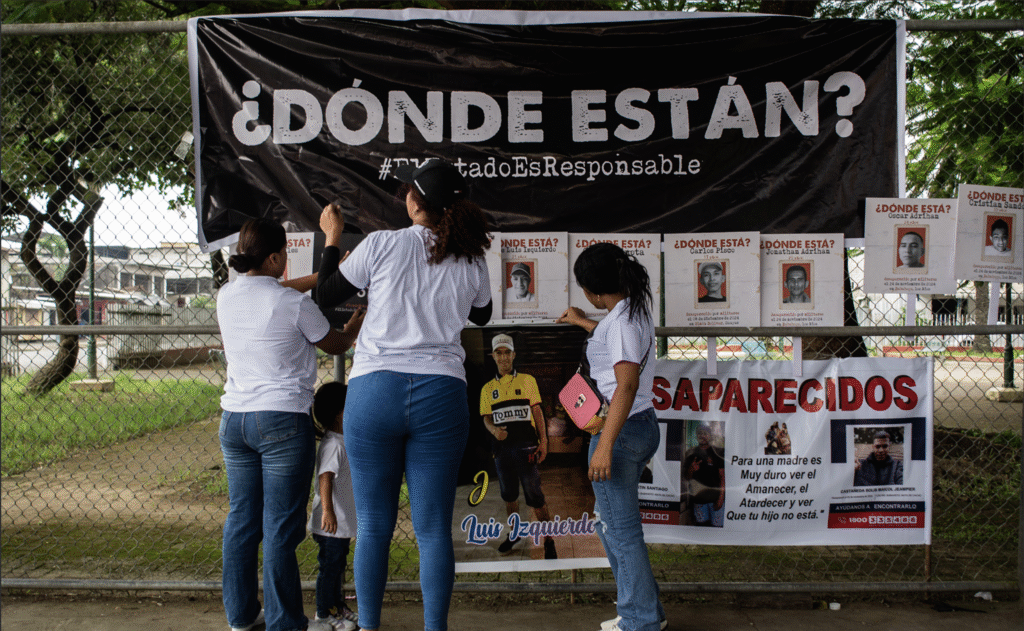
“, which documented the enforced disappearance of 10 people from the Ecuadorian coast, including six children, in the context of President Daniel Noboa’s so-called “Plan Fenix”, some progress has been made. Nevertheless, the lack of cooperation by the Armed Forces in the criminal investigations and the deepening of the policy of militarization of the public security continue to be the main obstacles preventing all victims’ families from obtaining truth, justice, and reparation, and from ensuring the non-repetition of these crimes, Amnesty International said today.
“The progress achieved over the past year demonstrates that it is possible to respond to the demands for truth and justice made by the families, civil society, and international mechanisms. Yet this progress remains insufficient as long as many of those families continue not knowing what happened to their loved ones and the military authorities continue to withhold essential information for the investigations,” said Ana Piquer, Regional Director for the Americas of Amnesty International.
The progress achieved over the past year demonstrates that it is possible to respond to the demands for truth and justice made by the families, civil society, and international mechanisms.”
Ana Piquer, Regional Director for the Americas of Amnesty International.
In December 2025, a court of first instance
convicted
16 military personnel for the enforced disappearance of four boys from the Las Malvinas neighborhood, in the south of the city of Guayaquil. In February 2026, the Constitutional Court issued a landmark ruling requiring the Air Force commander to
issue
a public apology to the boys’ families in an event that was broadcast live. In May 2026, a judge
ruled
that Dave Loor and Juan Santillán had been victims of enforced disappearance, as part of a decision on a habeas corpus petition filed by their families, which had be