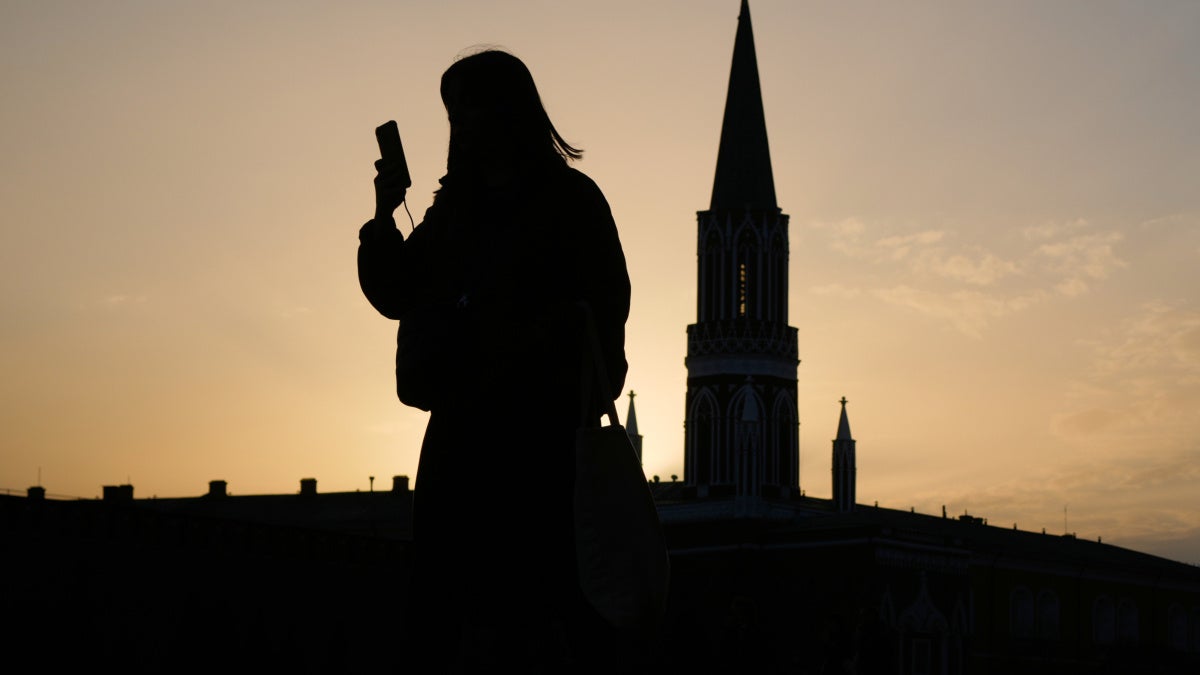
A person checks their phone in the Red Square in Moscow, Russia, March 31, 2026.
(Berlin, September 24, 2026) – Russian authorities are doubling down on their efforts to quash freedom of expression, including access to information, by increasingly suppressing tools to circumvent draconian censorship laws, Human Rights Watch said today. Virtual Private Networks (VPNs) services face intensifying blocking and takedowns from app stores.
“The Russian government’s escalating attacks on censorship circumvention services is part of its broader assault on access to information, privacy, and freedom of expression,” said Hugh Williamson, Europe and Central Asia director at Human Rights Watch. “These repressive tactics affect millions of people in Russia seeking to connect to the internet without state censorship.”
On August 4, 2026, Exploit media outlet reported that 20 Virtual Private Network (VPN) providers in Russia had faced service disruptions caused by the blockings carried out by the Russian authorities.
A representative of one of the affected VPN services told Human Rights Watch that the recent waves of blocking targeted VPN services’ infrastructure, namely, large blocks of IP addresses they use, including entire subnets of IP addresses allocated to them by their hosting service providers. Restoring VPN services following such bulk blocking can take more time and be more costly in comparison to previous more granular state blocking, the representative said.
In June, the authorities carried out a coordinated attack targeting Amnezia VPN, one of the most popular VPN services in Russia. One of Amnezia’s developers said that the authorities blocked its IP addresses in bulk, targeted employees with phishing emails in an attempt to obtain sensitive data, and used distributed denial of service (DDoS) attacks, which overwhelmed the service and disrupted its work.