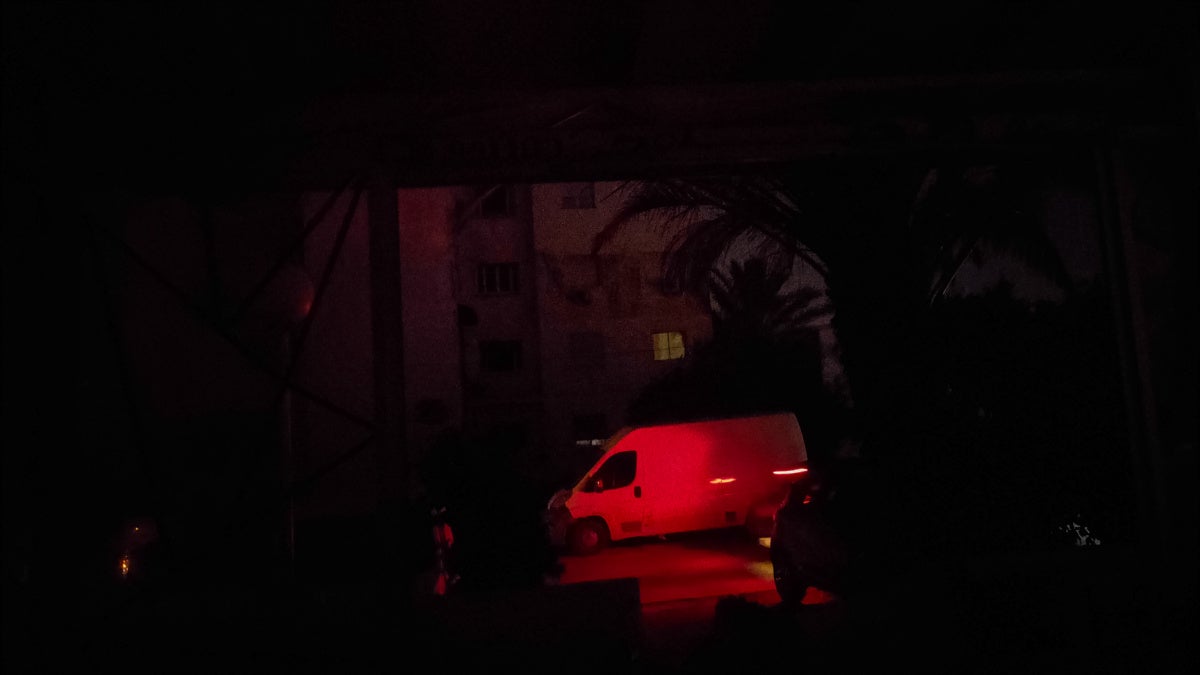
Cars pass through a darkened street during a nighttime power outage in Ariana, Tunisia, July 14, 2026.
(Beirut) – Tunisian authorities failed to ensure an adequate supply of electricity and water during two months of extreme summer heat, undermining the right to health and endangering lives, Human Rights Watch said today. President Kais Saied blamed the shortages on sabotage, yet authorities failed to provide transparent information and instead cracked down on protesters.
Rolling power outages left hospitals and water pumping stations without electricity and households without running water, interrupted critical medical procedures, and contributed to a nationwide shortage of drinking water. Doctors and human rights groups have reported a rise in heat-related hospitalizations and deaths exacerbated by the cuts, including among detainees.
“Tunisians have spent one of the hottest summers on record in the dark and facing water shortages because President Saied’s government failed to ensure adequate access to electricity for millions of people, risking lives,” said Bassam Khawaja, deputy Middle East and North Africa director at Human Rights Watch. “Instead of blaming sabotage, the authorities should address the root causes of the failure and ensure that everyone, including detainees, has access to water, electricity, and methods for cooling.”
In July 2026, the second-hottest July since 1950, the Tunisian Electricity and Gas Company (STEG) reportedly imposed rotating outages due to inadequate capacity. Power outages were concentrated between 1 and 5 p.m., when air conditioning increased demand. According to crowd-sourced data, outages lasted up to 12 hours in some extreme cases. In late August, a second wave led to cuts of up to two hours at a time in every region.
Tunisian authorities have not published transparent information about the impact of the outag
… [more]