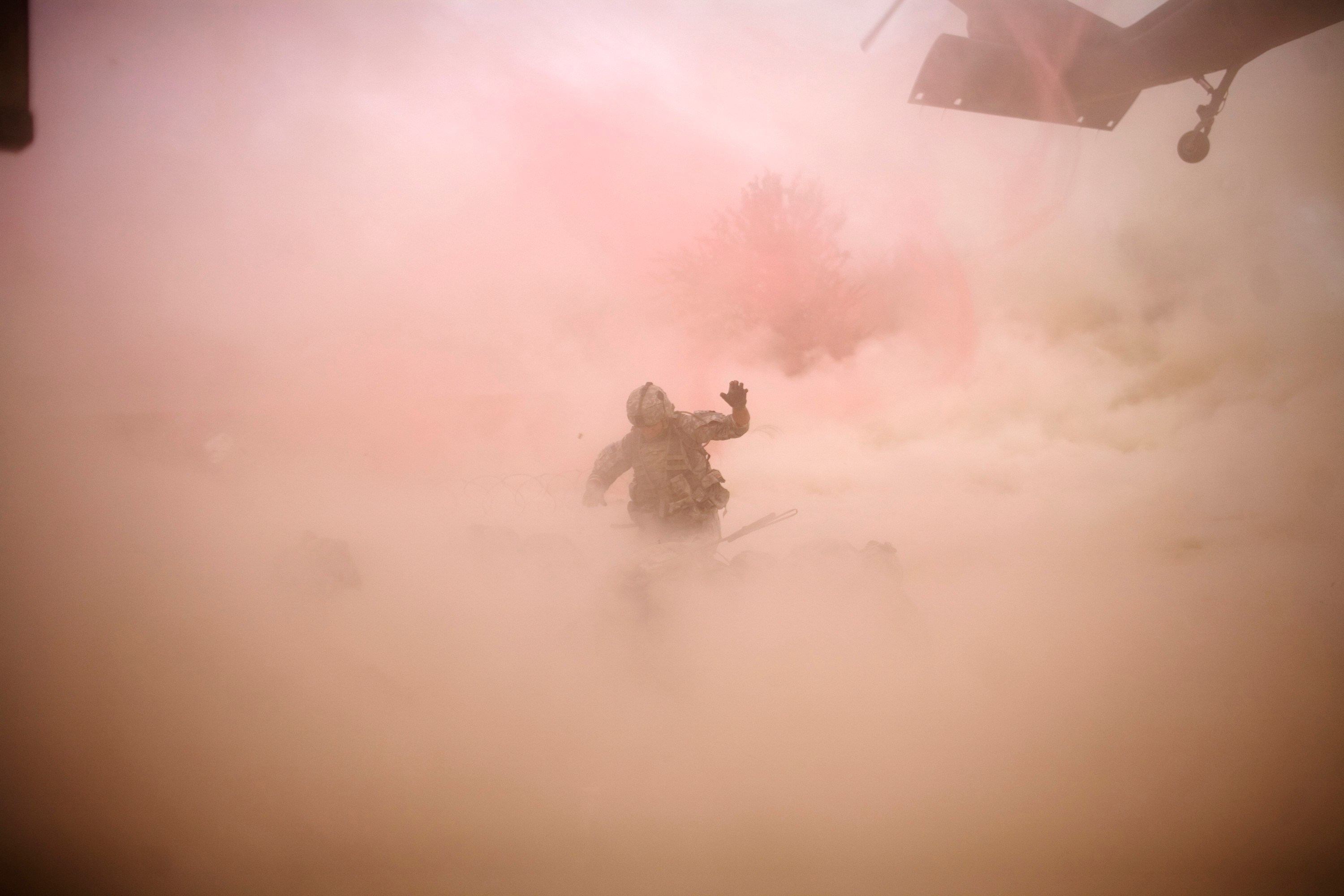
In the spring
of 2023, on a partly sunny day where the temperature flirted with 70 degrees, an Army veteran of the Afghanistan War walked into the unique
Prairie-style
police headquarters in Banning, California. In a
private room
in the detective bureau, the former specialist, who served with the storied 82nd Airborne Division, sat down with a special agent from the Army’s Criminal Investigation Division — better known as CID — to make a confession.
The veteran had served with roughly 20 mortarmen and scouts from a platoon in the 2nd Battalion, 508th Parachute Infantry Regiment assigned to Combat Outpost Ware in Afghanistan’s Arghandab River Valley in 2010. A lush land of grape groves and pomegranate orchards, towering sunflowers and marijuana plants, the Arghandab was crisscrossed by canals and was a flashpoint in Kandahar Province, the spiritual homeland of Afghanistan’s once and future rulers, the Taliban.
The soldiers from the 82nd Airborne played a cat-and-mouse game with the Taliban. America’s official policy was
counterinsurgency
, or COIN: a re-tread of a failed strategy of the Vietnam War that promised a kinder, gentler brand of warfare aimed at winning Afghan hearts and minds. But in the Arghandab Valley, the COIN of the realm was kinetic.
The Taliban seeded the orchards with improvised explosive devices set off by a foot on a pressure plate, a boot on a tripwire, or Taliban hands gripping a remote control. The Americans countered with overwhelming firepower:
attack helicopters
, armored gun trucks, and infantrymen toting M4 carbines. It was a “rough time for the unit,” another veteran of the platoon remembered. They saw a great deal of “contact,” engaging the Taliban more times than another unit member could recall.
But the former mortarman in Banning had come to talk about one particular incident that, more than a decade later, he could not forget.
The CID agent gave the veteran a “cleansing waiver of rights” to read and sign. It advise
… [more]