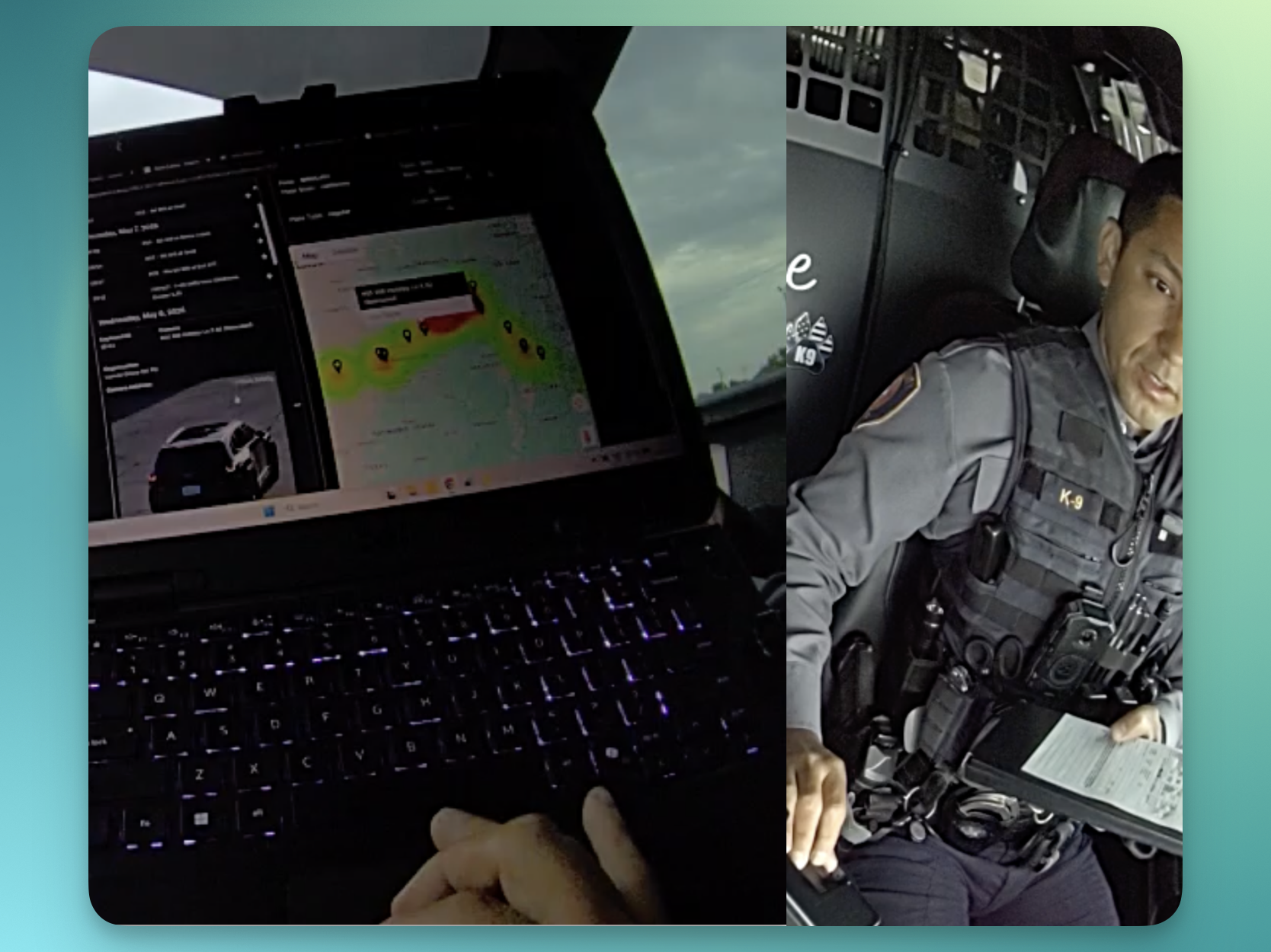
Body camera footage obtained by 404 Media reveals the first Flock camera searches ruled unconstitutional by a federal judge, and highlights how the system has turned otherwise mundane traffic stops into interrogations for drivers.
On Friday, we reported
that a federal judge ruled the use of license plate reader systems in the arrest of a woman named Melissa Kyle to be an “unconstitutional warrantless search,” “indiscriminate mass surveillance,” and a violation of the driver’s Fourth Amendment rights. The judge in that case ruled that, even though Kyle had more than 91 pounds of meth in her vehicle, the police had no justifiable reason to search Flock for her license plate and no reason to suspect that her travel as shown on Flock’s system was suspicious. Therefore, all of the evidence from Flock and the search of her vehicle must be thrown out.
The body camera and in-vehicle footage, alongside records from Flock and the Motorola ALPR system obtained by 404 Media shows how the use of license plate reader systems is being used to create probable cause where a person’s driving patterns are suspicious enough to pull them over.
404 Media obtained the footage with the help of one of our readers, who agreed to go to the U.S. District courthouse in Tulsa and purchase it from the clerk; the court did not make the footage available online even though it was entered as evidence in the case.
In the footage, which is from Tulsa County deputy sheriff Freddie Alaniz’s body camera, Alaniz is seen driving 60 miles per hour, one hand on the steering wheel, one hand on his laptop, searching Flock before he had even fully pulled over Alaniz. Alaniz had seen the car Kyle was driving had California license plates, and decided to pull it over for no reason other than it was from California, the court determined. The video shows that Alaniz told his colleagues that he was sitting on the highway and “saw her go by, and I just started running her info on Flock and Vigilant [Motorola