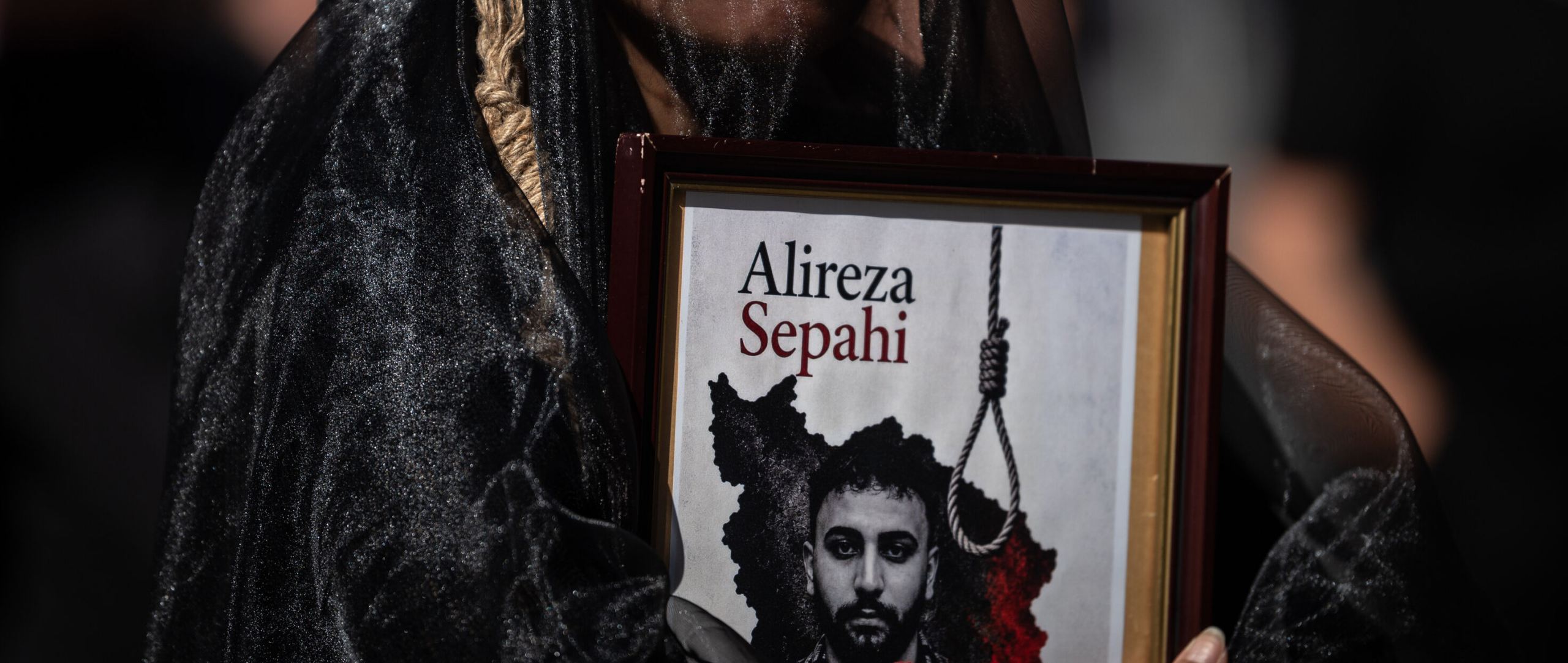
In response to the Iranian authorities arbitrarily executing five people convicted in relation to the January 2026 protests in the space of a week, between 30 September and 5 October – Ali Hemmati Sistanian, Alireza Raisi, Alireza Sepahi, Majid Nikandish and Siavash Jamshidi Kheirabadi – following grossly unfair torture-tainted trials, Diana Eltahawy, Deputy Regional Director for the Middle East and North Africa at Amnesty International said:
“The arbitrary executions of these five young men serves as another chilling reminder of how the Iranian authorities weaponize the death penalty to render the cost of dissent so high that it terrorizes the population into silence and deters further mass uprisings challenging their repressive decades-long rule.
“These executions followed reports illustrating a frightening and familiar pattern: denial of access to lawyers during interrogations, refusal to investigate defendants’ claims of torture and other ill-treatment, accusations of involvement in the killing of members of security forces and other violent and non-violent acts during protests, the use of televised forced ‘confessions’ as evidence, and trials before Revolutionary Courts that are inherently unfair. For instance, Alireza Sepahi reported being subjected to torture and other ill-treatment and was denied access to a lawyer during interrogations at the investigation stage. Such proceedings make a mockery of justice, laying bare the Iranian authorities’ utter disregard for the right to life.
“Scores of people including dissidents and protesters remain at risk of politically motivated executions as authorities intensify repression citing ‘wartime conditions’ and national security threats, increasing the urgent need for coordinated diplomatic pressure on Iran to halt all planned executions.
“Systemic impunity has emboldened Iran’s authorities to continue their assault on the right to life and other human rights,
underscoring
the urgent need for the referr
… [more]