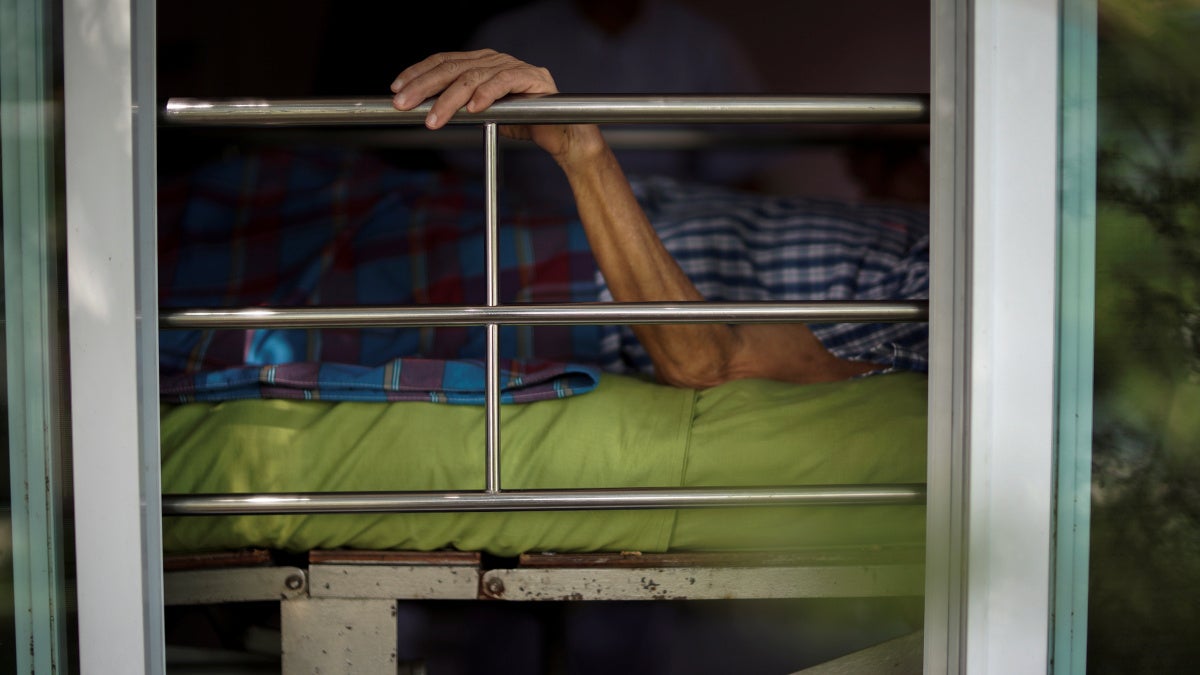
A person lies in bed at a nursing home in Ayutthaya, Thailand, April 9, 2016.
A care facility in Kanchanaburi, Thailand made headlines in early October when photos of conditions in the facility went viral, including images allegedly depicting metal cages that confine residents to their beds. Further investigation by the country’s Department of Health Service Support uncovered unsanitary conditions and overcrowding, as well as evidence that the facility had been treating residents with psychosocial disabilities (mental health conditions) without an appropriate license.
The whistleblower, known as “Mae Phat,” appeared on television to recount her experiences at Sothornchai Nursing Home as a former resident, describing how she was involuntarily committed, forced to take medication, and physically restrained, often for hours at a time.
Thai officials promptly ordered the facility’s closure as well as inspections of 1,203 facilities for older people nationwide. While the authorities have taken appropriate first steps, conditions at the facility have raised broader concerns about institutionalization, shackling, and the treatment of older people in Thailand.
The United Nations Department of Economic and Social Affairs predicts that 28 percent of Thailand's population will be 65 or older within the next decade. Though Thailand has launched a community-based long-term care program for older people, responsibility for care falls under several government ministries. Ongoing shortages of qualified care and support workers as well as budgetary constraints leave many older people reliant on family care, which not all families can adequately provide.
The Thai government should take this opportunity to reconsider its fragmented policies and commit to ensuring older people are treated with dignity and empowered to make decisions about their care and support. The governm