Play Video
Read a text description of this video
TEXT ON SCREEN
October 28, 2025
Rio de Janeiro, Brazil
NARRATION
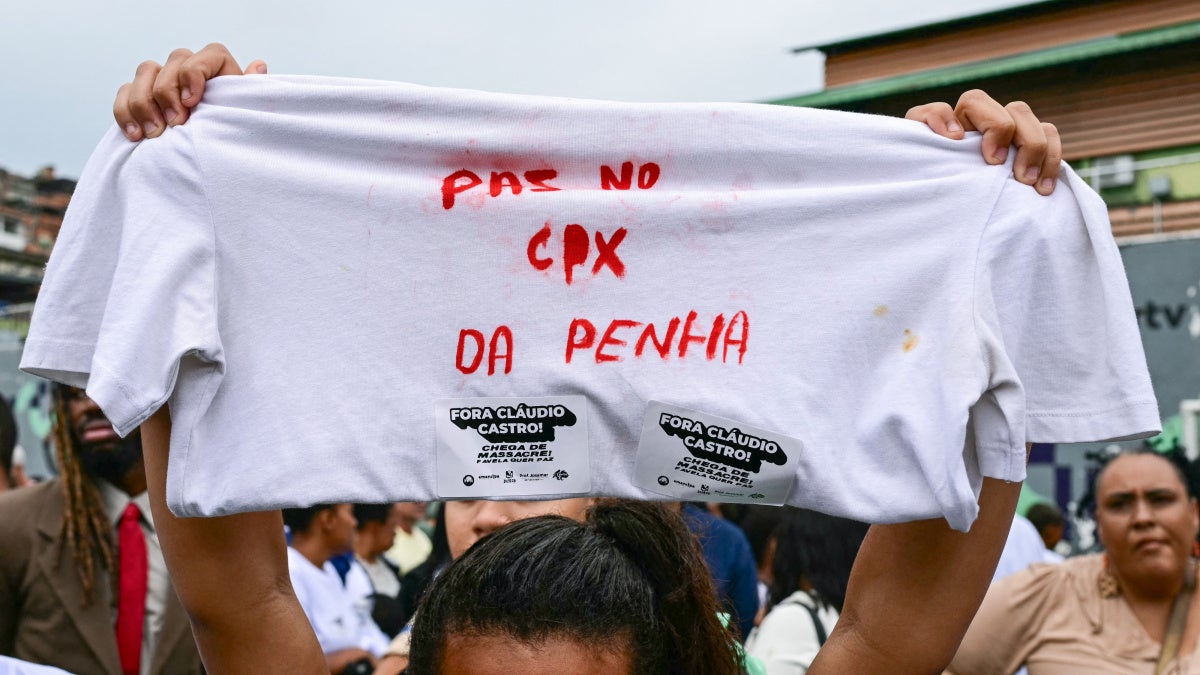
On the morning of October 28th, 2025, hundreds of police officers surrounded two low-income neighborhoods in Rio de Janeiro.
By nightfall, the operation would become the deadliest in Brazil's history.
TEXT ON SCREEN
WARNING. This video contains graphic content, including blurred images of dead bodies. Viewer discretion advised.
NARRATION
122 people were killed, including two children and five police officers. According to the autopsy records, over eighty five percent of non-police victims were Black.
Police in Rio de Janeiro are required by Supreme Court order to wear body cameras.
However, only twenty-three percent of officers wore body cameras that day, and in the footage reviewed by Human Rights Watch, not a single killing was captured on camera.
LOWER THIRD
Damir Khairat
Research Technologist
Digital Investigations Lab
NARRATION
Human Rights Watch was given access to the prosecutor's investigation into the operation, including 8,800 pages of records, 122 autopsies, and nearly 4,000 hours of body camera footage.
TEXT ON SCREEN
Prosecutors have released the body camera footage shown in this video. Most footage is sealed as evidence and cannot be published.
NARRATION
Watching all the footage day and night without any breaks would have taken a single researcher almost six months. So, we trained several artificial intelligence models to help us identify the moments that mattered most.
First, we needed to organize everything.
The models, alongside software that Human Rights Watch developed, synchronized recordings from different officers, mapped their locations, and scanned footage for gunshots and signs of camera tampering.
From there we had a searchable platform that let us view the operation as one coordinated event, rather than thousands of separate recordings.
What