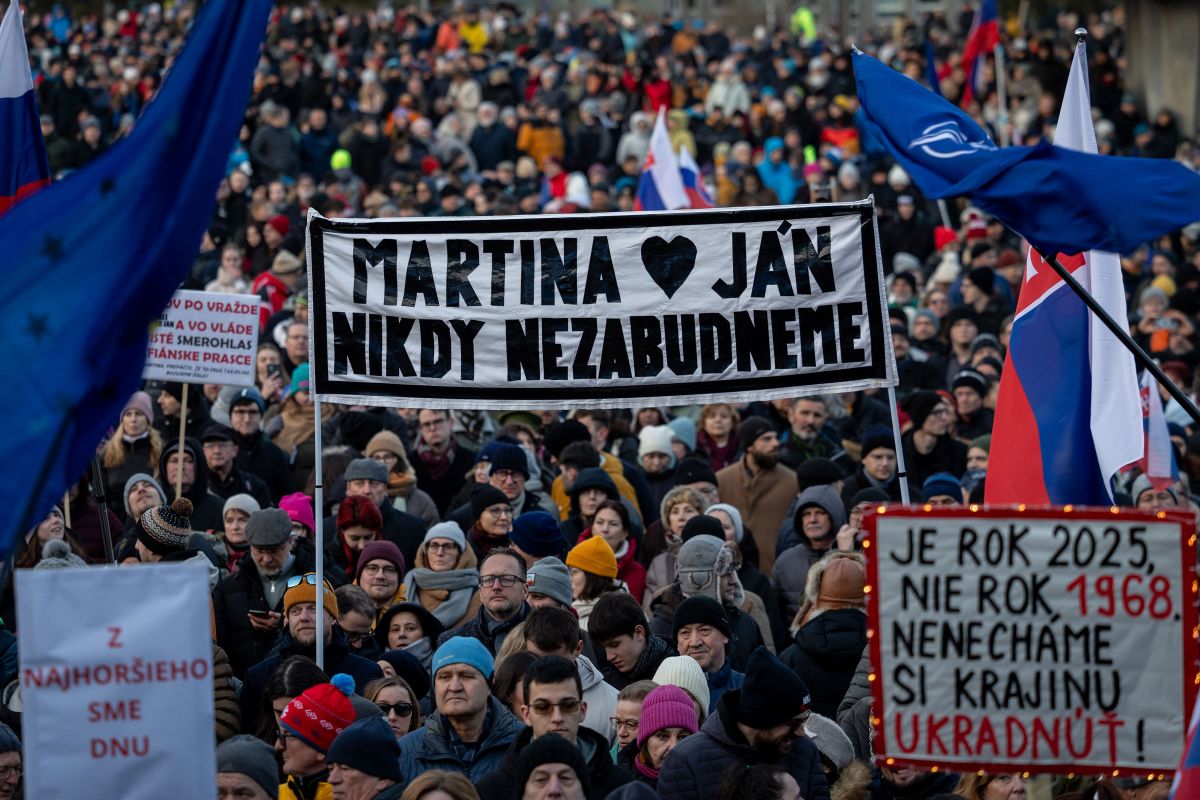
When Ján Kuciak, an investigative journalist who exposed corruption and tax fraud, was murdered alongside his fiancee in Slovakia in 2018, a national outcry ensued with
65,000 people
hitting the streets and the subsequent ouster of the Slovak prime minister. Justice in Kuciak’s case is still in process but in February 2026,
well over
1,000 still rallied to mark the eighth anniversary of his killing.
Similar scenes of public demands for justice, even years after journalists have been murdered, have become rituals around the world, from protests for Sri Lanka’s
Lasantha Wickrematunge
, Malta’s
Daphne Caruana Galizia
, Mexico’s
Javier Valdéz Cárdenas
, and Palestinian-American journalist
Shireen Abu-Akleh
, to calls for accountability in the murders of the Philippines’
Gerry Ortega
and Ghana’s
Ahmed Divela
, among countless others. This persistent wave of outrage continues because of the resounding public sentiment that lies will not be tolerated, that facts matter, and that those who report the truth are on the right side of history.
Seeking justice for journalists killed in the line of duty or
murdered
in retaliation for their work has long been a priority for the Committee to Protect Journalists. More than 1,050 journalists have been murdered since CPJ began keeping records in 1992, and impunity remains rampant, with 86% of cases in the last decade having complete impunity: meaning that no one has been held accountable. Since 1992, the vast majority of those murdered were local journalists reporting on politics, corruption and in the trenches of war. Too often, such cases are limited to apprehending those who executed the crime, rather than those who planned or funded it. Full justice – where all perpetrators, from killers up to masterminds, are successfully prosecuted – has been achieved in only 50 cases.
An illuminated poster of slain Palestinian-American journalist Shireen Abu Akleh hangs on a building overlooking a decorated market street
… [more]