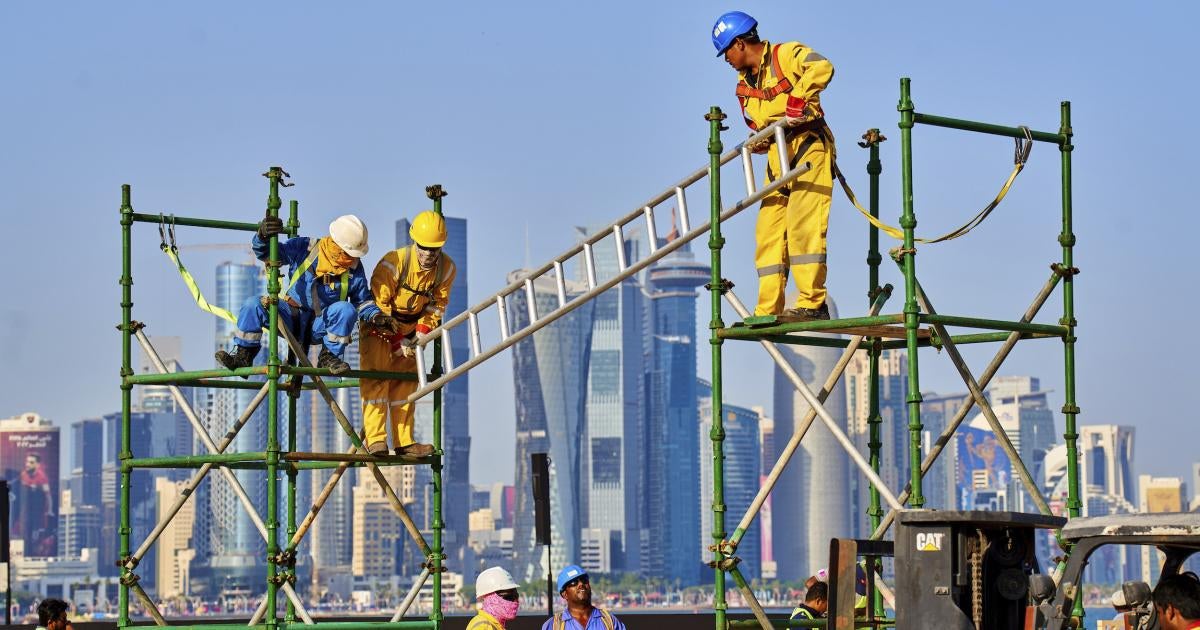
Construction workers in Doha, Qatar, November 16, 2022.
(Beirut) – Gulf Cooperation Council (GCC) countries are exposing migrant workers to yet another deadly summer without adequate occupational health and safety protections as temperatures soar to dangerous levels, Human Rights Watch said today.
Migrant workers, particularly outdoor workers, are left to fend for themselves as they balance the pressures of extreme heat and physically taxing work, and relentless demands from their employers. The “heat [is] so intense that it is beyond the endurance of an ordinary person,” one worker said.
“Despite a wealth of evidence on both global temperature increases and the severe health risks extreme heat exposure poses, Gulf states are dragging their feet on adopting adequate protections,” said Michael Page, deputy Middle East director at Human Rights Watch. “Gulf states have the means and capacity to adopt these protections, including restricting working hours based on actual temperature thresholds rather than fixed schedules.”
Between February and May 2026, Human Rights Watch spoke to 20 migrant workers from Bangladesh, Nepal, and Pakistan working in construction and app-based bike delivery about heat and occupational health and safety issues in Kuwait, Qatar, Saudi Arabia, and the UAE. This is the fourth consecutive year that Human Rights Watch has interviewed outdoor workers to better understand extreme heat risks.
June marks the start of the enforcement period of midday work bans in several Gulf states, their sole heat exposure protection measure, which prohibits outdoor work during certain hours in summer months. These bans generally apply from June through August or September and restrict outdoor work between late morning and mid-afternoon.
However, there is growing scientific evidence on the limitations of calendar- and time-based bans to shield worker