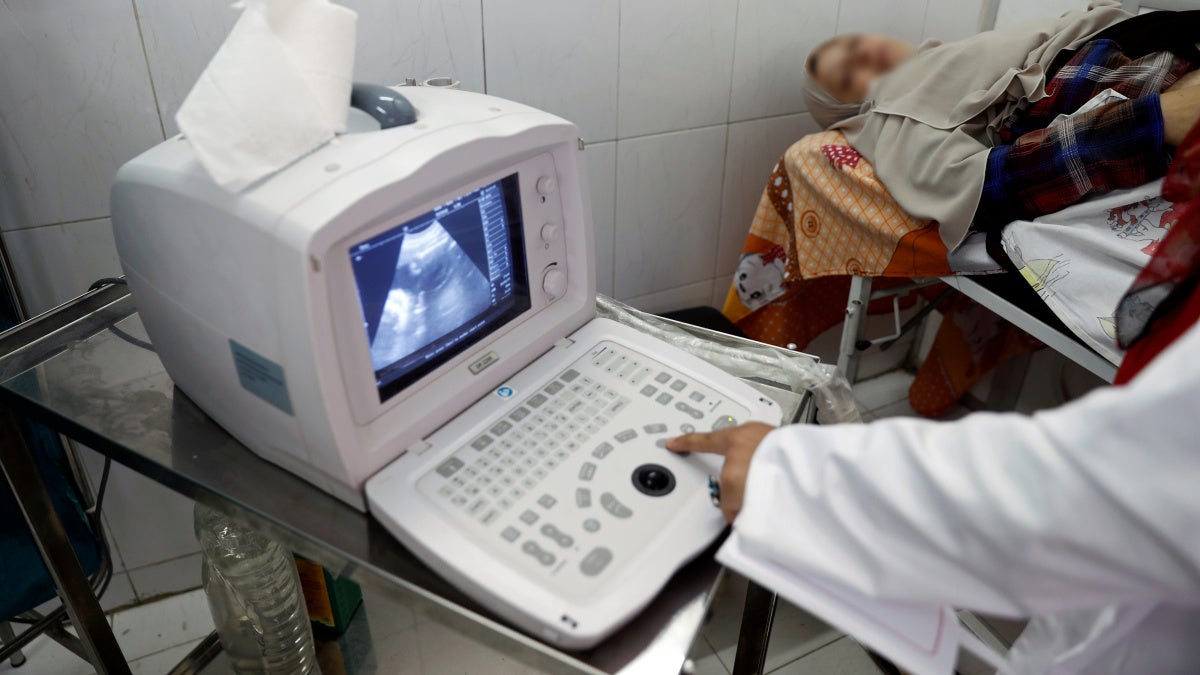
A doctor examines a pregnant woman at a hospital in the province of Fayoum, southwest of Cairo, Egypt, February 19, 2019.
An Egyptian court sentenced doctor and filmmaker Omnia Suwydan on July 4 to a six-months suspended prison sentence and a fine of 20,000 Egyptian pounds (US$408) for alleging obstetric violence at an Alexandria public hospital.
Obstetric violence, which includes physical and emotional abuse of pregnant people seeking sexual and reproductive health services, is a widespread but broadly ignored form of gender-based violence.
Suwydan wrote a Facebook post on June 15 describing degrading, violent, and potentially criminal treatment of women seeking reproductive health care, including physical and verbal abuse, sexual abuse, refusal of care, and medical negligence that she said she witnessed at the government hospital. She made allegations of abuses against women that are impossible to ignore.
Suwydan’s post was met with a powerful response online: Women, doctors, and advocates described humiliation, coercion, neglect, and abuse during childbirth and gynecological care in Egyptian hospitals, alleging unethical practices with little or no consequences. The flood of stories suggests that obstetric violence in Egypt is not isolated bad behavior, but a systemic problem shaped by power imbalances; particularly for lower income patients seeking free government services who face class discrimination, weak oversight, and normalization of women’s suffering.
Security forces arrested Suwydan at her home in Damanhour on June 16, just hours after the post was widely shared.
Prosecutors charged Suwydan with “spreading false news” and misusing a social media account before releasing her the next day on bail of 20,000 Egyptian pounds ($408), her lawyers said. For these minor offenses, authorities referred her to trial before a criminal court, which sentenc