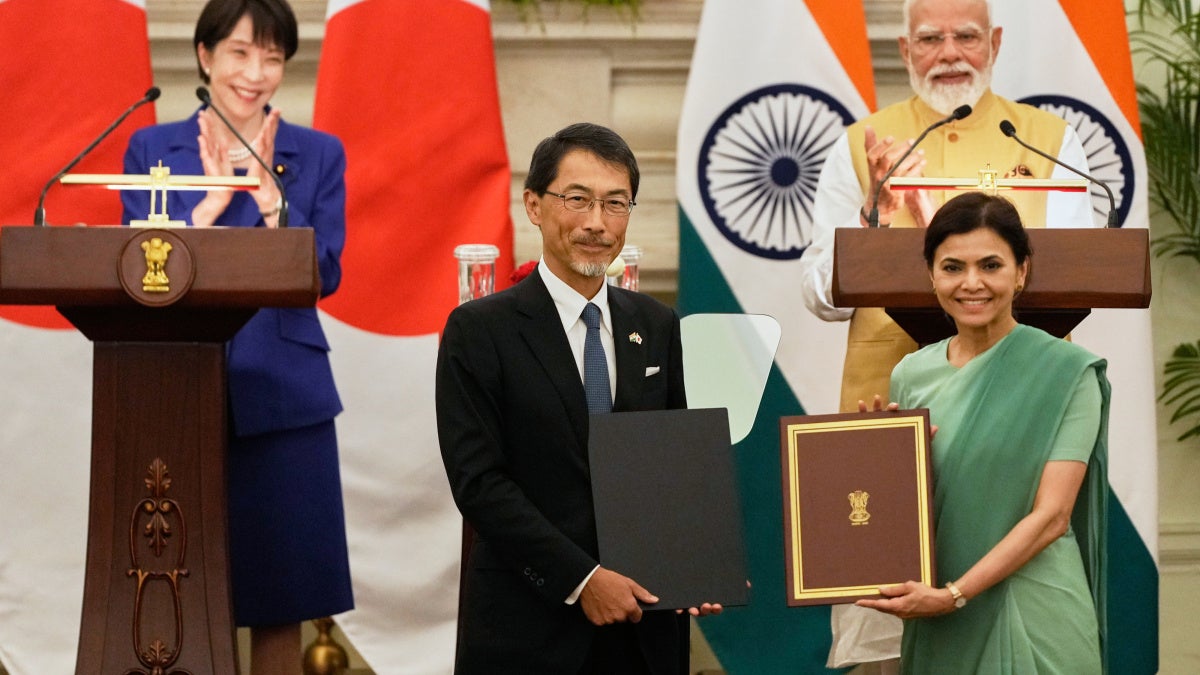
Left to right: Japan's Prime Minister Sanae Takaichi, Japan's ambassador to India Ono Kelichi, India's ambassador to Japan Nagma Mohamed Mallick, and India's Prime Minister Narendra Modi with a signed bilateral agreement after their delegation level meeting in New Delhi, India, July 2, 2026.
On July 2, Prime Minister Sanae Takaichi, on her first visit to India since taking office, met with Prime Minister Narendra Modi. Under their shared "Free and Open Indo-Pacific" vision, an effort to counter China, they agreed to deepen cooperation on security, energy, and investment, unveiling about 120 business agreements worth 2 trillion yen (US$12 billion).
Japan has long called India a partner sharing universal values. When then-Prime Minister Shinzo Abe and Modi elevated ties to a "Special Strategic and Global Partnership," both pledged to uphold "democracy, human rights, and the rule of law."
There is no indication that human rights or the rule of law were discussed, notwithstanding the Modi administration’s long-running slide into authoritarianism. His Hindu nationalist government has tightened its crackdown on civil society groups and the media, imposing internet shutdowns and prosecuting activists, journalists, and peaceful protesters on fabricated charges.
The administration has stifled rights groups through foreign funding regulations and adopted discriminatory laws and policies targeting religious minorities, especially Muslims but also Christians. Police complicity has emboldened Hindu nationalist groups to attack minorities with impunity.
Japan should not repeat the mistakes of its China policy. After the 1989 Tiananmen massacre, Japan led the way in re-engaging a shunned Chinese government. The West, too, bet on engagement without human rights conditions, expecting economic growth in China would bring political liberalization and, ultimately, respect