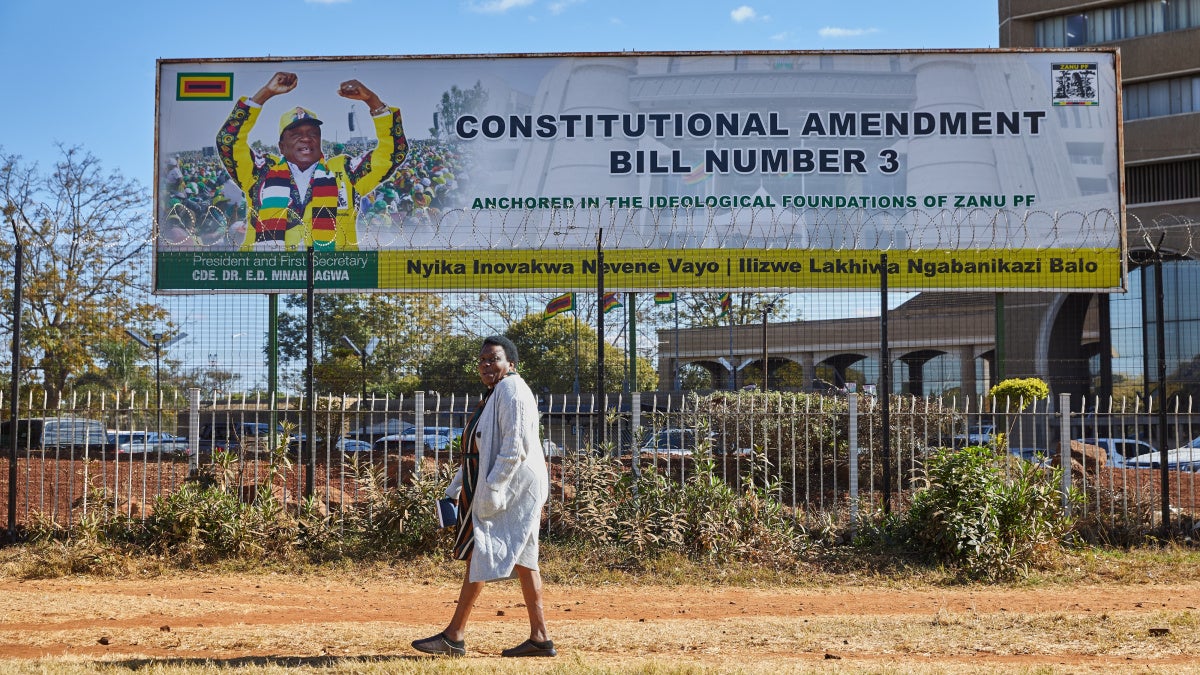
The ZANU PF headquarters in Harare a day after Zimbabwe President Emmerson Mnangagwa signed Amendment Bill No. 3 into law, amending the Constitution, July 8, 2026.
Zimbabwe’s President Emmerson Mnangagwa signed a law on July 7 amending the constitution to extend presidential terms from five to seven years. The amendment, approved by parliament last month, also abolishes the election of the president by popular vote and establishes a parliamentary method for selecting the president.
Zimbabwe’s 2013 Constitution limited the term of a president to a maximum of two five-year terms, which would require President Mnangagwa to step down in 2028. The new law effectively keeps him in office for an additional two years and postpones the 2028 elections until 2030.
The constitutional amendment followed a resolution in October 2025 by the ruling ZANU PF party. The party said an extension of Mnangagwa’s rule was necessary “to ensure continuity, stability and the sustained transformation of the nation.”
Human Rights Watch documented attacks and arbitrary arrests against civil society groups, opposition political parties, student leaders, and activists opposed to the proposed constitutional amendment.
After assuming power in a military coup in 2017, Mnangagwa was elected president in 2018 and reelected in 2023. He had previously stated that he was a “constitutionalist” who would “abide by the provisions of [the] constitution to the letter.”
Civil society groups raised concerns that the Constitutional Amendment Bill was an attack on the country’s democracy. The Constitutional Defenders Forum mobilized against the bill because it altered protected constitutional structures. Lovemore Madhuku, a prominent lawyer and leader of the National Constitutional Assembly, filed a case at the Constitutional Court to halt the constitutional amendment process. The court dismissed the c