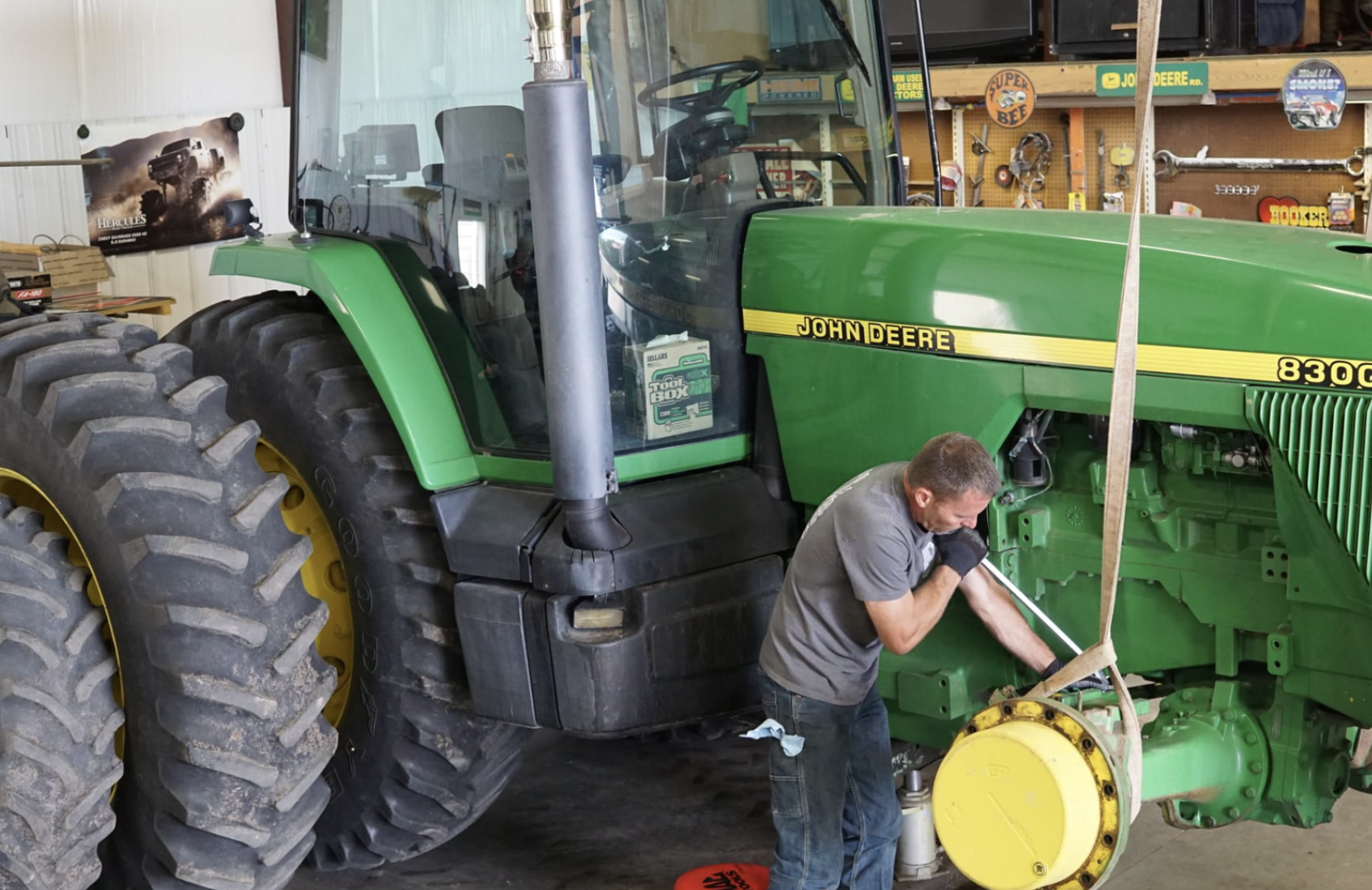
Wednesday, John Deere agreed to give farmers broader access to repair their tractors and farm equipment
under an antitrust settlement agreement
with the Federal Trade Commission, one of the biggest wins in the long right to repair battle. The settlement is the latest and by far the most important development in several recent lawsuits against John Deere, and is finally an agreement that isn’t full of half measures and doesn’t have massive, obvious loopholes.
The FTC settlement is far better than a recent, highly controversial settlement in a separate class action lawsuit against Deere brought by farmers in Illinois, and it’s worth breaking down the differences. Two years ago, I wrote an article called “
The Walls Are Closing in on John Deere’s Tractor Repair Monopoly
,” which followed that Illinois case, in which several farmers brought a complex, class action antitrust lawsuit against Deere. The judge in that case, Iain Johnson, wrote several scathing opinions about Deere’s anti-repair practices that indicated that he was seemingly inclined to hit Deere with stiff penalties.
But after years of litigation, the plaintiffs in that case decided to settle with Deere in April,
earning a $99 million payout
for farmers who paid for repairs over the last decade, and several right-to-repair protections that did not have much in the way of legal teeth.
This $99 million payout was roughly $79 million after legal fees and to be divided among more than 200,000 farmers; this means each farmer will receive roughly $395, or “less than the cost of a single authorized dealer service call for a typical 500-acre farm,” according to an analysis by Willie Cade, a longtime farm right to repair advocate.
“Bottom line is that farmers are getting $0.79 per acre for the eight years of Deere abuse,” Cade told me. “Bad settlement. The settlement is insufficient … the money is a small fraction of what the class could recover at trial, the claims process depends on labor-hour data only Deere

Corporate Control
Meta Sued Over Training Data for Its AI and Face-Recognition Systems
Meta's alleged unauthorized collection of biometric data from billions of users to train AI and face-recognition systems represents… [more]

