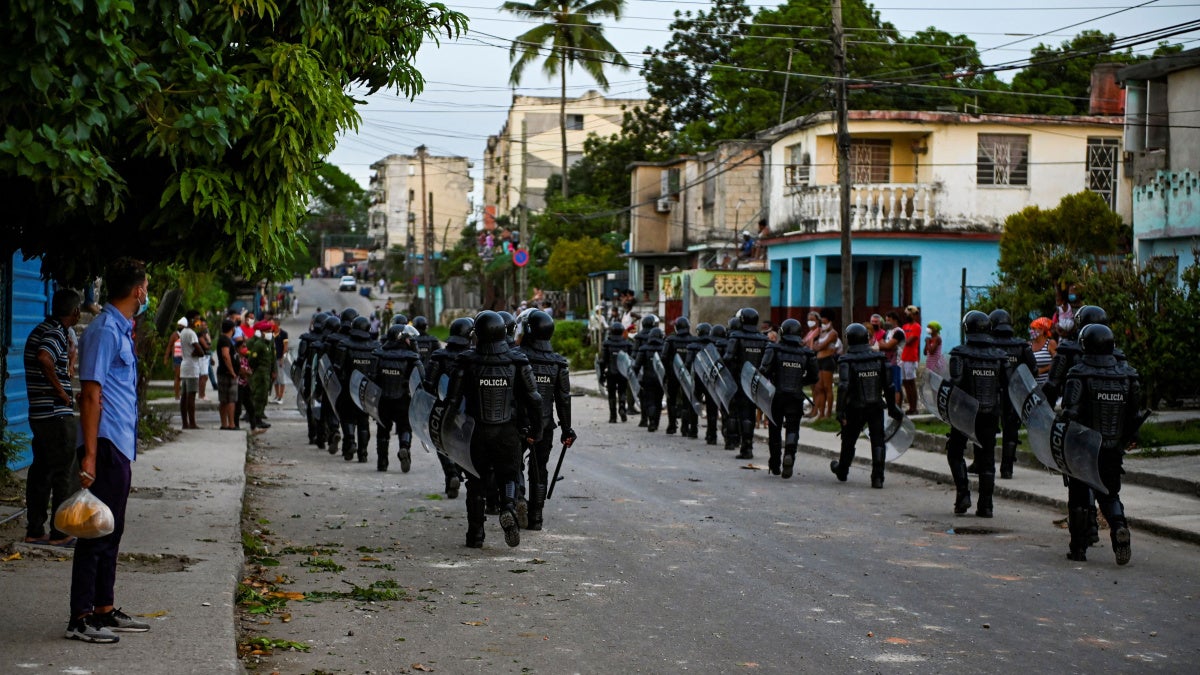
Riot police walk the streets after a demonstration against the government of President Miguel Diaz-Canel in Arroyo Naranjo Municipality, Havana, Cuba, on July 12, 2021.
Five years ago, on July 11, 2021, Cuba experienced its largest nationwide demonstrations since the 1959 Revolution, as thousands took to the streets amid severe shortages and calls for greater rights and freedoms. The government responded with a wave of repression, deepening decades of restrictions on dissent. Rights groups Justicia 11J and Prisoners Defenders estimate that about 800 political prisoners remain behind bars, nearly half in connection with those demonstrations.
Human Rights Watch found that Cuban courts convicted many of them of crimes for engaging in what should be lawful acts of free expression and association. Others were accused of violent crimes, such as throwing stones, based on unreliable or uncorroborated evidence, and sentenced to disproportionate prison terms. Human Rights Watch also spoke to former detainees who described serious abuses in prison, including beatings, solitary confinement, and lack of medical care.
Luis Manuel Otero Alcántara, an artist and activist arrested as he was heading to the demonstrations, was sentenced to five years in prison. He should have been released on July 9. Instead, Cuban authorities transferred him to an undisclosed location where, according to his friend, activist and curator Anamely Ramos, he remains in custody while awaiting admission to the United States under the Significant Public Benefit Parole program. She said the authorities' actions suggest that they are making his release contingent on him leaving the country. Ramos, who spoke with Otero by phone on July 9, said he was unable to tell her where he was being held.
Juan Enrique Pérez Sánchez joined the 2021 protests and is serving eight years for “contempt, public disor