NIne months into the Trump administration’s deadly campaign against so-called drug boats, there is a pattern to the strikes. And a glaring anomaly.
The U.S. military has conducted more than 60 attacks, resulting in over 200 extrajudicial killings in the Caribbean Sea and Pacific Ocean. In almost all the strikes, between one and four people lost their lives. In only one strike did the death toll of a single boat reach double digits: the first attack on September 2, 2025.
Since then, experts, lawmakers, and even military officials behind the scenes have been asking a simple but haunting question: Why was that boat packed with 11 people?
“Why would 11 people be on board a boat carrying drugs?” said a government source who attended a classified briefing where the large crew on the first boat attacked was discussed. “It’s a high risk for the cartels. That always stood out.”
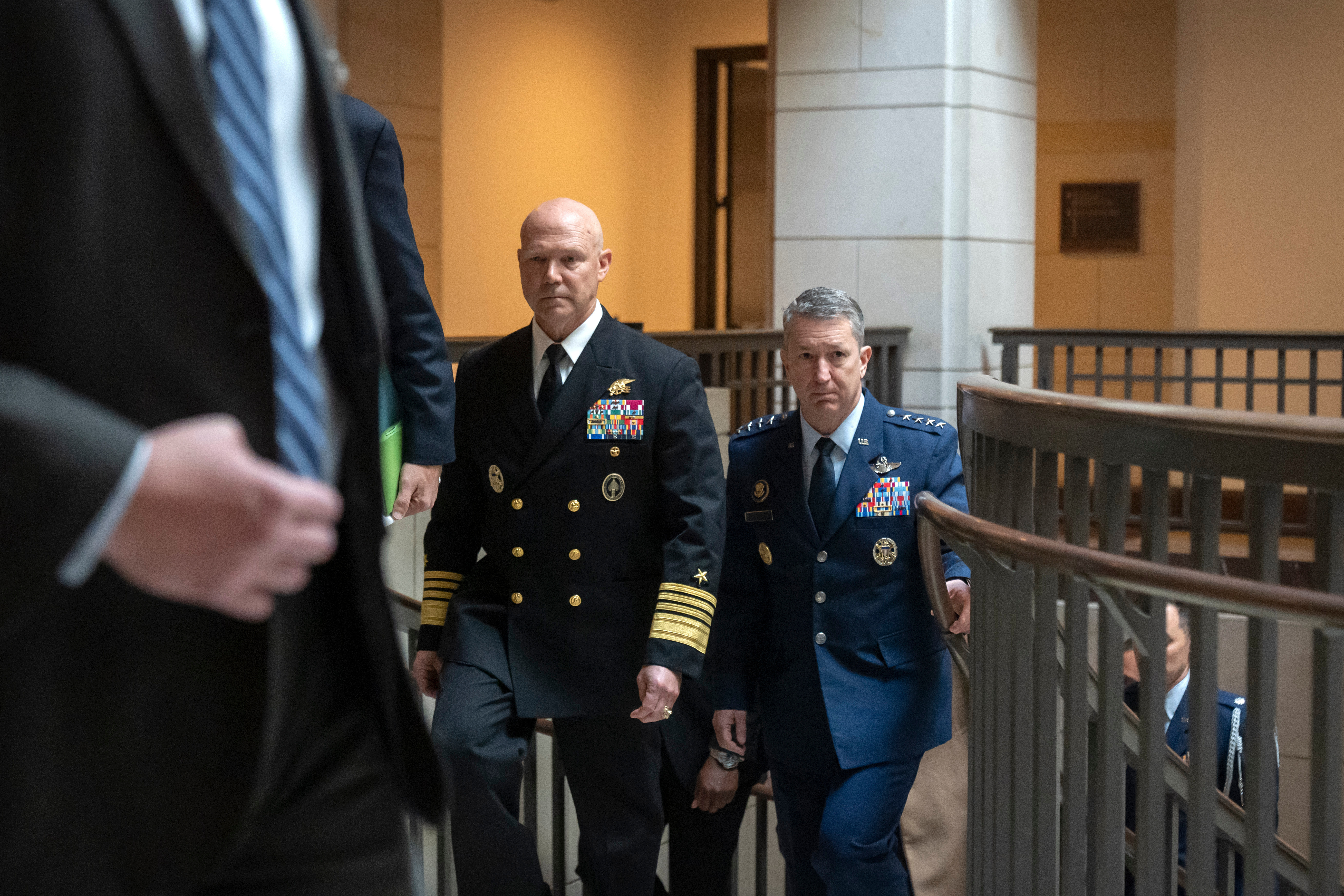
One top military officer provided a plausible explanation, behind closed doors on Capitol Hill, The Intercept has learned. His admission raises even more questions about a strike that a high-ranking Pentagon official called a criminal attack on civilians and resulted in a firestorm in Congress last year.
In the briefing, the high-ranking officer on the Pentagon’s Joint Staff stated that some of the people killed by the U.S. military may have been the victims of human trafficking.
A 40-foot go-fast boat with four 200-horsepower engines sped off from San Juan de Unare on Venezuela’s Paria Peninsula deep in the night of September 1. It was “probably headed to Trinidad or some other country in the Caribbean,” Secretary of State Marco Rubio would later say .
As the peñero cut through the warm waters of the Caribbean Sea, a secret U.S. Special Operations plane flew high above . Its transponder was “squawking” its military identity by radio. But to the 11 people on the boat below, the plane — a secret Special Operations aircraft with a non-military appearance — would have looked lik

War & Militarization
Former top US diplomat reveals mistakes made after 9/11 attacks
A diplomat's retrospective on post-9/11 US military actions in Afghanistan and Iraq documents how emergency powers were leveraged for… [more]

