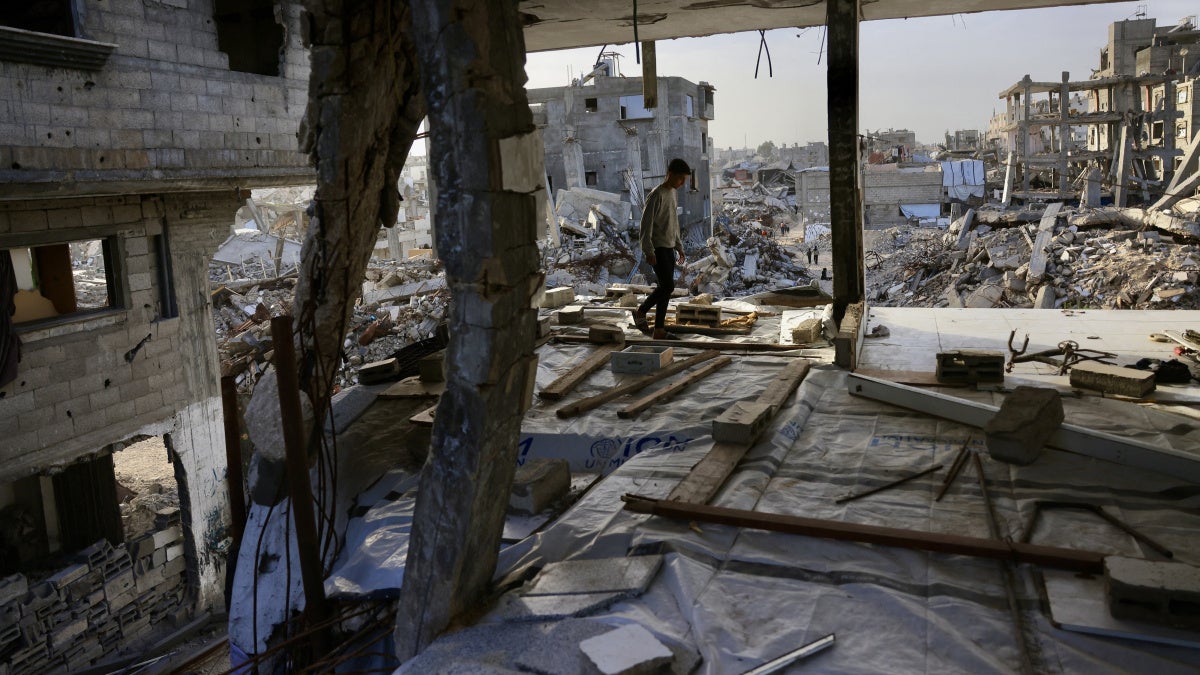
A Palestinian boy walks inside a destroyed building in Khan Yunis in the southern Gaza Strip, January 27, 2026.
(Beirut) – Israeli forces continue to kill and wound civilians and deny sufficient food, aid, and water to Palestinians in Gaza one year after a ceasefire agreement took effect on October 10, 2025, Human Rights Watch said today. Israel’s acts of genocide and crimes against humanity, including forced displacement and extermination, have persisted throughout the ceasefire. Other countries should take immediate measures to protect civilians and ensure that rights-based reconstruction begins.
The Board of Peace, authorized under United Nations Security Council Resolution 2803, is tasked with assessing parties’ compliance with the Comprehensive Plan to End the Gaza Conflict. Promises of humanitarian relief and the restoration of essential civilian infrastructure are central to the plan. Yet, a year on, aid volumes remain far below required levels, critical humanitarian access routes have been repeatedly obstructed, and reconstruction has not yet begun. Continuing Israeli attacks have killed at least 1,400 Palestinians and wounded 4,881 others, according to Gaza’s Health Ministry, bringing the death toll since October 2023 to over 74,000, including over 21,000 children.
“The outside world may be under a dangerous illusion that life in Gaza is returning to normal, but reality tells a very different story,” said Sarah Sanbar, acting Israel and Palestine researcher at Human Rights Watch. “There is nothing normal about living in a tent under bombardment, without enough food or drinking water for your family.”
With winter approaching, families living in an Israel-engineered shelter crisis face preventable deaths and suffering affecting key human rights such as the rights to housing, health, and education. Ninety-four percent of Gaza’s population lacks ad