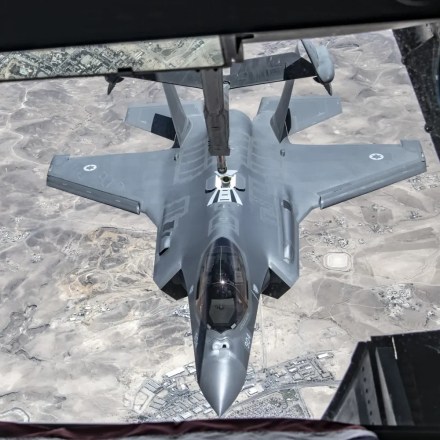
In May 2023,
the Pentagon’s shiny new fighter jet was not looking so shiny or new.
Already a decade late and nearly $200 billion over its original cost estimate, the F-35 program faced a new crisis. An internal government watchdog report detailed a
cascade of new problems
with the program, which was in a period of flux amid plans to upgrade the jet’s engine and cooling system.
The
report
from the Government Accountability Office criticized the Pentagon for lumping those upgrades in with the overall purchase of the planes. Conflating the two, the authors said, would limit congressional insight into cost increases. And they criticized the contractors behind the aircraft for failing to deliver the F-35 in a timely manner.
For Lockheed Martin, the main defense giant overseeing the development of the F-35, the timing was far from ideal. In a few weeks, Congress was set to debate the Pentagon’s mammoth budget — and with it, new funding for the military’s purchase of F-35 jets.
Collins was the largest recipient of Lockheed cash in the period surrounding the inspector general report.
So Lockheed and its lobbyists went on a charm offensive in Washington. The weapons maker shelled out hundreds of thousands over a two-month period, in what the money-in-politics watchdog
Open Secrets described
as “one of the largest coordinated lobbying efforts” around that year’s military budget.
No member of Congress benefited more than Sen. Susan Collins, R-Maine, who at the time served as the ranking member on the Defense Appropriations Subcommittee.
From May 1 to June 30, 2023, employees and top executives from Lockheed Martin donated $59,500 to Collins’s campaign committee. The donations were outliers during that period: Collins was among the largest recipients of Lockheed cash; the company was her largest single donor over those two months; and it was the largest spending blitz on Collins by Lockheed compared to the same period in other years.
The effort appeared t
… [more]