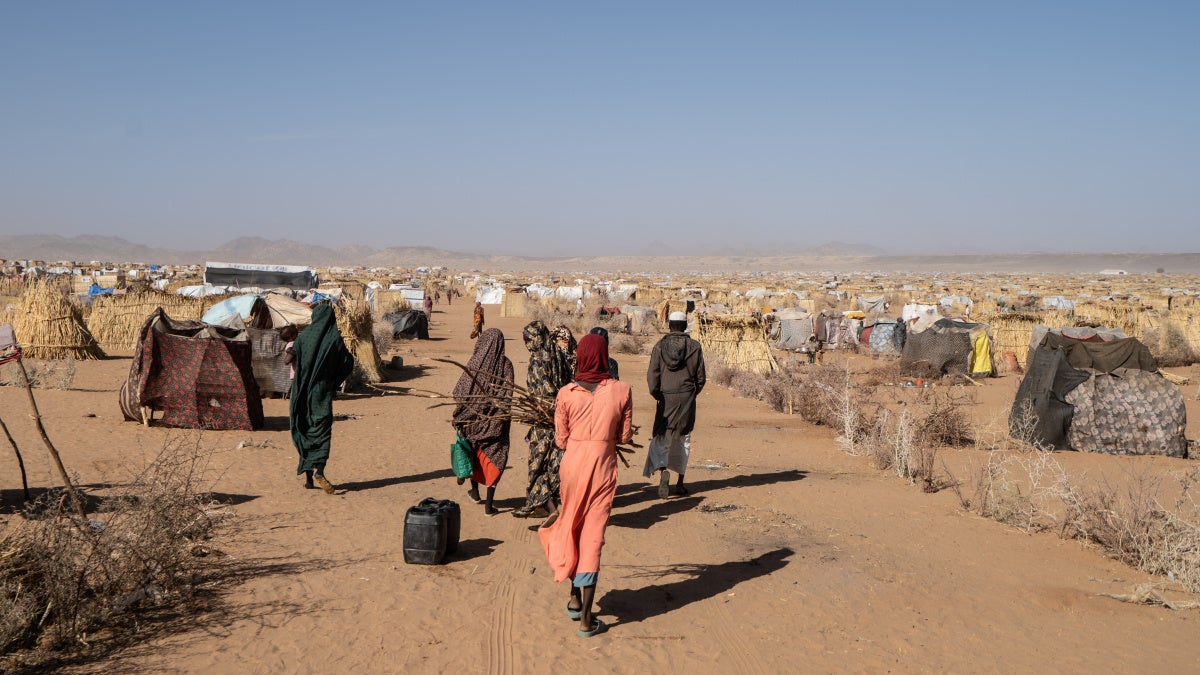
Displaced women and girls walk through the vast IDP site in Tawila, Sudan, February 23rd, 2026.
“It is as if a tsunami had hit the city,” said a resident who returned to Sudan’s El Fasher only to find it destroyed and largely abandoned after the Rapid Support Forces’ (RSF) October 2025 takeover.
For 18 months, the RSF laid siege to the city, digging a trench around it in its final months, forcing starving residents to survive on animal fodder, until even that ran out.
In the siege’s final weeks, the RSF increasingly used drones to target government soldiers, aligned armed groups, and civilians who were ensnared in a tiny area, leaving many maimed or dead.
During the last days of the offensive, the RSF committed multiple massacres. The UN Human Rights Office estimates over 6,000 people were killed in just three days.
RSF fighters also committed widespread sexual violence against women and girls and ran a massive abduction-for-ransom racket, killing those who couldn’t pay. Thousands of civilians may still languish in RSF dungeons.
Colombian private military contractors trained in UAE military bases were deployed alongside the RSF on the front lines, operating drones and artillery. Survivors’ accounts confirm the contractors were present during some of the worst atrocities.
The UN fact-finding mission on Sudan concluded that the RSF campaign bore the “hallmarks of genocide,” adding to an increasingly damning body of evidence of the RSF’s serious crimes.
Governments did not act to prevent these atrocities. In the aftermath, several governments formed a coalition to prevent further atrocities and promote justice in Sudan, and they now need to act together to meet survivors’ demands that those responsible be brought to justice.
One year on, RSF commander Mohamed Hamdan Dagalo “Hemedti” has not even been sanctioned – bar previously by the President Biden ad