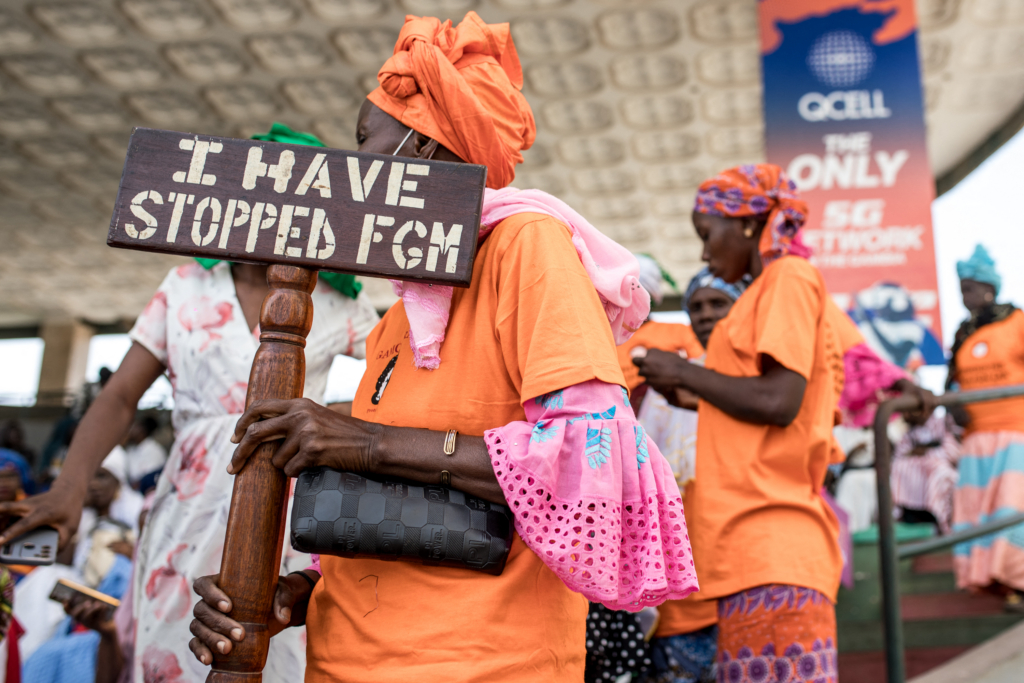
Thirty-year-old Tala Camara grew up in the Upper River Region in rural Gambia. An entrepreneur and consultant, she also volunteers for several organizations. A survivor herself, she raises awareness about the harm caused by female genital mutilation (FGM) through community meetings and mentoring for children.
According to the
2020 Demographic and Health Survey
, 73% of Gambian women aged 15–49, and 63% of girls aged 10–14, have been subjected to FGM. FGM can lead to a range of complications including chronic pain, infections, difficulties during childbirth, mental health issues and even death.
The 2015 Women’s (Amendment) Act sets out punishments for performing, aiding and abetting FGM. A bill introduced in parliament to reverse the ban on FGM was
rejected
in July 2024. In April 2025, a member of parliament and religious organizations appealed to the Supreme Court to request the repeal of the law passed in 2015. The Supreme Court began reviewing the appeal on 18 December 2025.
“The act that has been done on me is still fresh in my memory. I was only seven, but it still lingers in my head. During the holiday season, I was taken to the village with my cousins. We were cut by a woman who used to live in our community.
If I hadn’t undergone FGM, I would have been much happier. It has held me back on so many things, including getting married and having children. Whenever I hear a story about FGM it triggers something in me. Sometimes I can speak out on my social media handles, but other times I just need to go mute because I don’t know how to balance it in my head. I haven’t fully recovered. Being a survivor is challenging whether we speak about it or not.
I’ve been an activist for over 15 years now. Because I stood my ground, my little sister was not cut. I have a sense of responsibility towards her and other children. Most of the children I have mentored are now adults. I always tell them that they should serve as protectors to the younger ones, just l
… [more]

