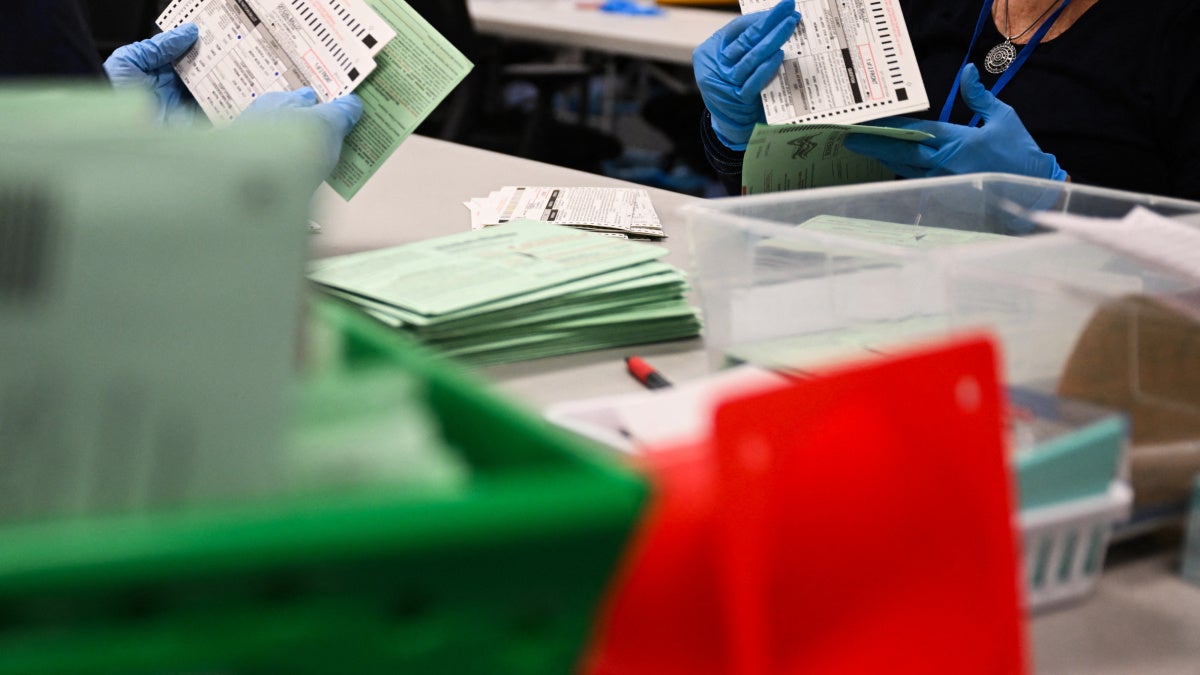
US election workers open and inspect mail-in ballot envelopes during processing inside the Maricopa County Tabulation and Election Center (MCTEC) on Election Day, November 5, 2024, in Phoenix, Arizona.
(Washington, DC) – US states’ use of a tool to verify citizenship that is marred by inaccurate and incomplete data is creating new hurdles for the right to vote with the midterm elections only days away, Human Rights Watch said today. The Supreme Court ruled in late September 2026 that states could use the tool, Systematic Alien Verification for Entitlements (SAVE), to screen lists of registered voters for citizenship status, at least for the time being.
“The use of the SAVE tool is causing new hurdles for some voters,” said Katherine La Puente, US democracy researcher at Human Rights Watch. “Sending vaguely worded letters as early voting began or offering federal-only ballots to some registered voters risks a discriminatory impact on people’s right to vote.”
The Trump administration expanded use of the problematic SAVE online system, which previously had been used only for public benefits and was not designed for verifying voter eligibility, in 2025 to now use it for these purposes. Some states have adopted their use of SAVE to verify voter eligibility, and the recent Supreme Court ruling has allowed its use for individualized inquiries. Federal law does not require proof of citizenship when registering to vote, but states have passed these laws requiring proof for state and local races, resulting in bifurcated voter systems.
In Utah, thousands of voters flagged by the SAVE database were sent notification letters over the summer, and in October over 4,000 who didn’t respond were mailed ballots with only federal races.
In South Dakota, nearly 6,000 voters have been categorized as federal-only voters as well as 47,000 in Arizona. In Utah and Arizona, they c