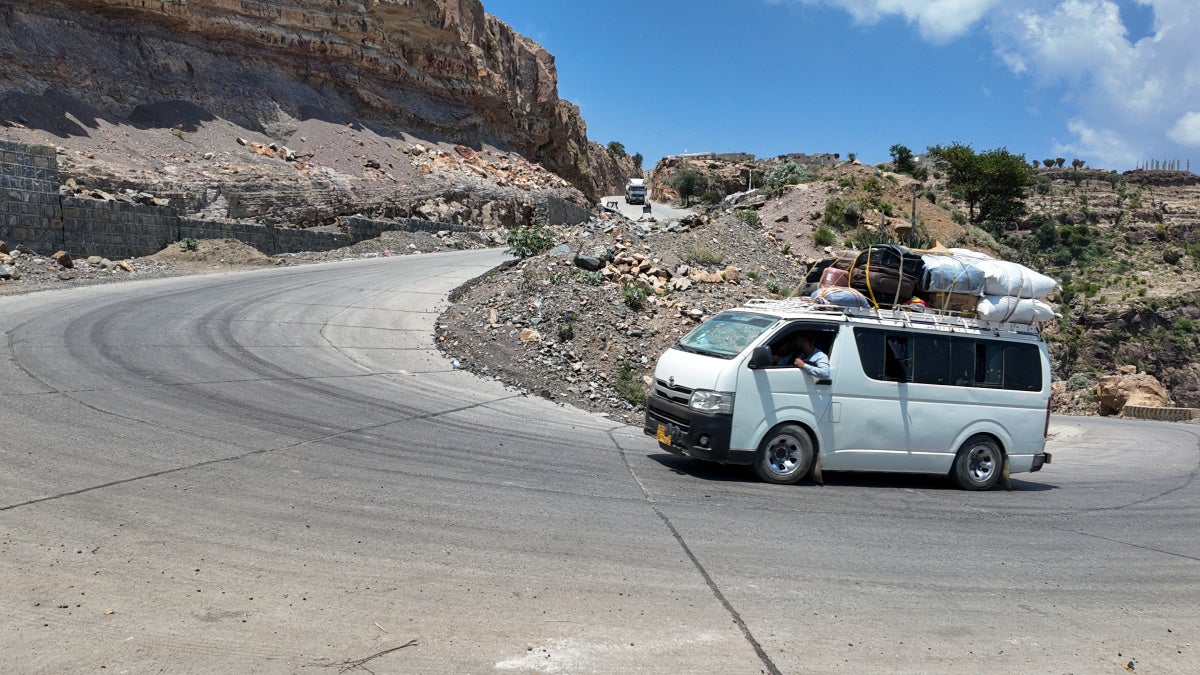
The Hayjat al-Abd road, which connects Aden to Taizz city, Yemen, September 26, 2026.
(Beirut) – A long-running humanitarian crisis in Taizz, Yemen’s third-largest city, has drastically worsened since October 2026, when the Houthi armed group forces fully encircled the city and blocked and attacked the remaining major supply route, Human Rights Watch said today. Since then, there have been severe shortages of fuel, food, water, medicine, cooking gas, and access by humanitarian agencies.
Houthi forces have surrounded Taizz since 2015, early in the conflict with the Yemeni government. While government-backed forces control the city center, Houthi forces have blocked access to all major roads connecting Taizz to the rest of the country, with the road connecting Taizz with Aden the most important. While international law does not prohibit sieges of military forces, the Houthis’ siege has for 12 years severely restricted civilian movement and impeded essential goods to the city’s residents.
“Renewed efforts by the Houthis to cut off food, water, and medicine to Taizz show their utter disregard for civilian lives,” said Niku Jafarnia, Yemen and Bahrain researcher at Human Rights Watch. “Throughout the 12-year-long siege of Taizz, the Houthis have bombed, starved, and denied humanitarian aid to a million residents of the city with scant adherence to international law.”
The Houthis should immediately open vital roads for essential goods and aid to civilians in Taizz. All warring parties need to facilitate aid and the safe movement of civilians.
Human Rights Watch spoke to fifteen people in October, including five city residents, four doctors and six civil society workers. A Houthi spokesperson told Human Rights Watch on October 21 that Yemeni government forces, not Houthi forces, were blocking roads into the city. But residents, civil society workers, and Unite